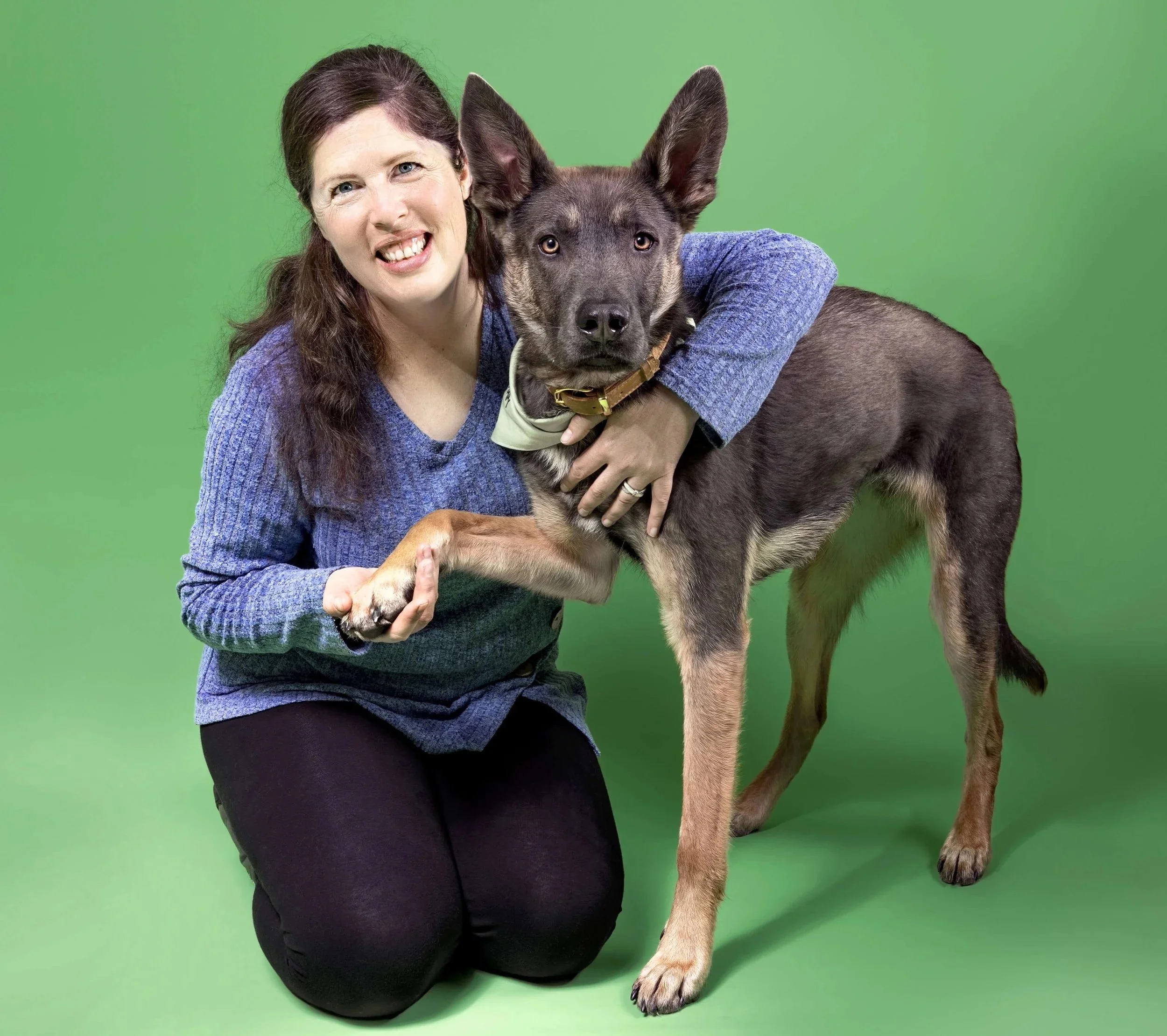
“Working with and training a therapy animal is an emotional experience. There is joy, heart-ache and tears, but most of all there is a genuine human and animal bond that will last a lifetime.” Tiffany Bailie
It’s been seven years this month since I first experienced the power of a therapy dog. Bringing my Labrador/Great Dane mix Delta to meet an extremely avoidant, anxious, and angry child in a desperate hope to somehow connect with him was one of the greatest moments of my professional and personal life (see the full story here).
It kickstarted a passion for the possibilities animal-assisted therapy offers and re-ignited a love for my profession in a moment when the chaos of a caseload teeming with challenging kids was slowly draining me.
At the time, there were few resources about how to safely and effectively partner with a therapy animal. It felt like every session was an experiment. Some worked, some didn’t. We had a couple close calls that highlighted how little I actually knew, but pushed me to become more in-tune with the needs of both my therapy dog and the children in my care.
Seven years and five therapy dog partners later it’s become second nature to me to flow between more traditional speech and language activities and animal-assisted ones, often developing new ideas on the spot as the need arises.
I can still remember those early challenges, but it’s getting harder.
Having also worked this whole time in my own solo private practice, I side-stepped many of the bureaucratic red-tape that can impact providers who want to bring an animal into their workplace.
That’s why I sought out three new animal-assisted speech therapy providers to tell their stories: stories of challenges and joys, frustration and enthusiasm.
Jennifer Mitchell is a speech-language pathologist with 27 years of work experience who for the past year has partnered with her facility dog Brandy VII with preschool through eight grade students (see more of Jenn and Brandy’s story in Partnership with Purpose: Is a Facility Dog Right for You?).
Kailey Petrehn is a ten-year veteran of the field. She is currently working four days a week at a middle school with her guinea pig partners and one day a week at Rewilding Speech, her own farm- and community-based private practice where she is building out programming for young adults in response to community need.
Tiffany Bailie is a speech-language pathology assistant working in both a school and a private clinic setting with children ages two to 22. She is currently training her therapy dog partner, a Bassett Hound puppy named Walter, with plans to include him in her work in the near future.
So what insights into getting started in animal-assisted speech therapy did Jenn, Kailey, and Tiffany have to share?...
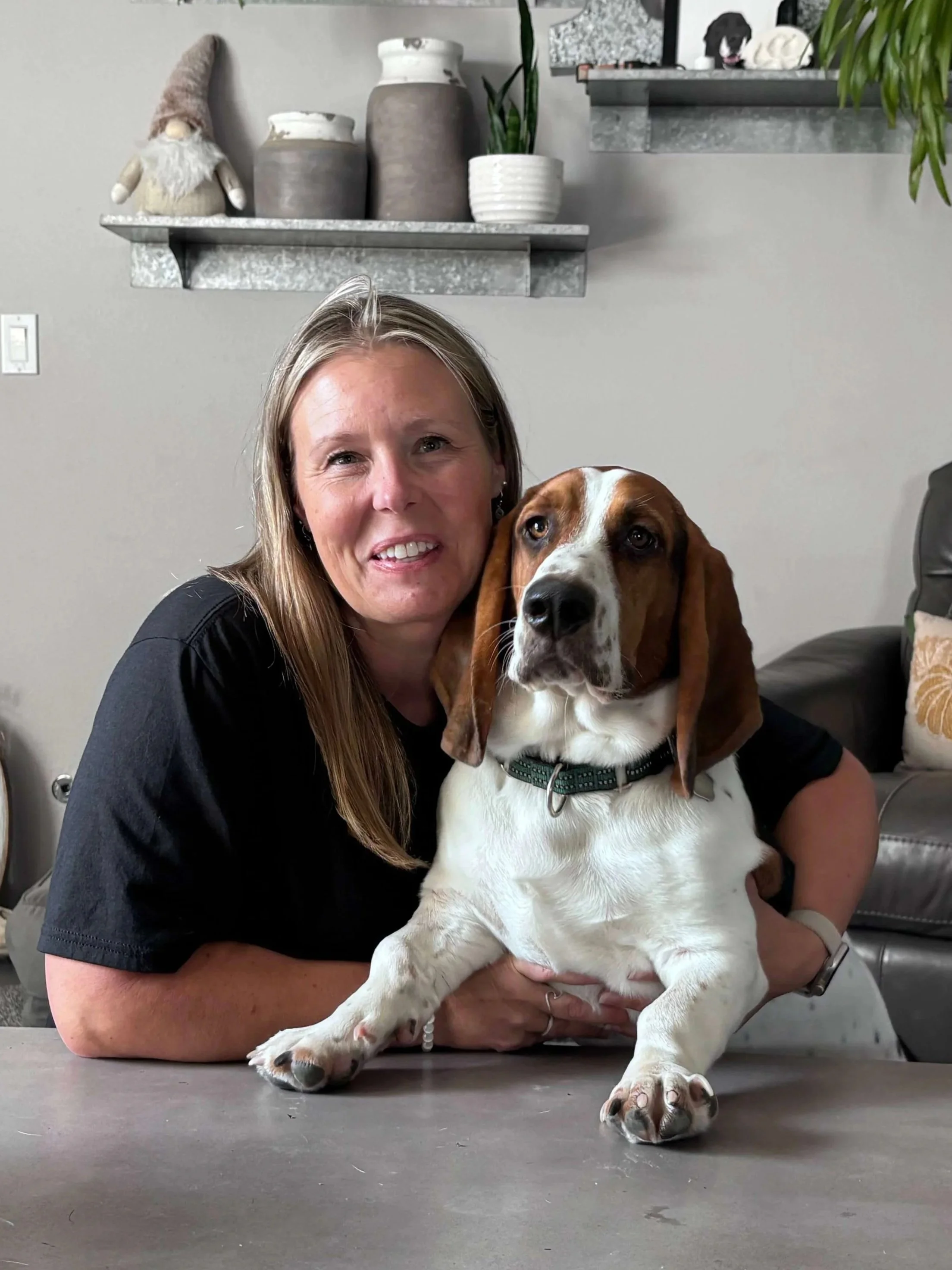
“While searching for a new pup for our family I was given a book mark that stated ‘Dogs are an SLP’s best friend’ [a promotional item for Paws for Progress]…What? There was a possibility of bringing two of my passions together for the benefit of others. From that day forward I began researching and learning as much as I possibly could.” Follow Tiffany on Instagram @Walterthetherapyhound.
Barriers to partnering with a speech therapy animal
While all three providers noted primarily positive interest among colleagues when they expressed a desire to bring a therapy animal to work, the transition wasn’t without some friction.
“Bringing a dog into a school requires thoughtful education and communication,” Jenn found.
“A facility dog may be a wonderful support for many students, but not every person is immediately comfortable around dogs. Some individuals may have allergies, fears, cultural considerations, or simply prefer not to interact.
“It has been important to respect those differences and to ensure that participation with Brandy is always invitational rather than expected.”
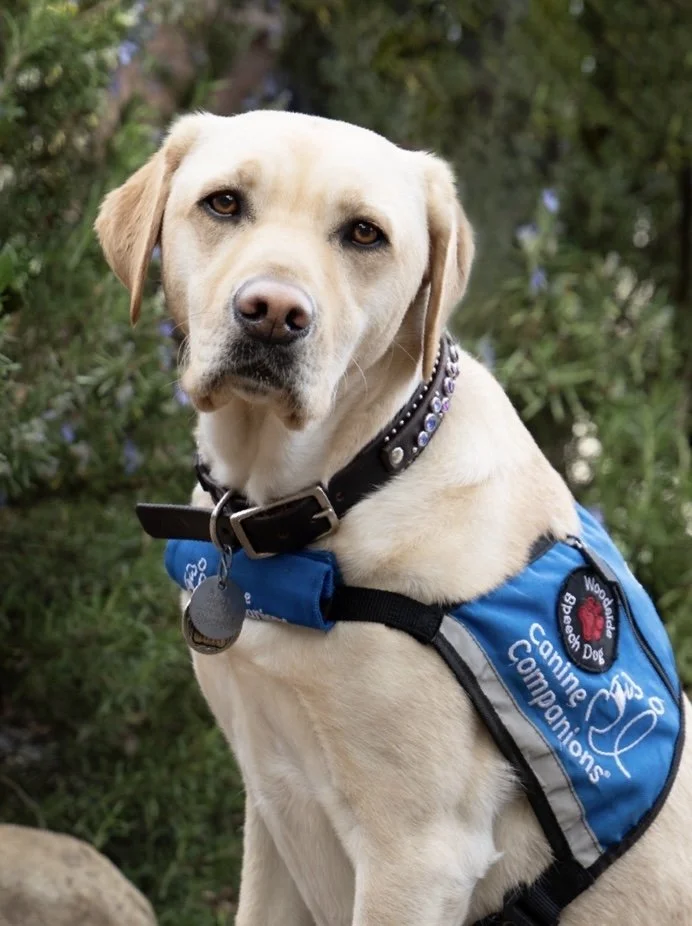
Jenn said, “Before applying [for a facility dog], I completed a course through Speech Dogs that focused on incorporating animal-assisted intervention into speech-language therapy…that helped me envision how a dog could support communication in meaningful and intentional ways.”
Kailey noted, “I definitely got a lot of laughs when I said I was going to try to incorporate guinea pigs into speech therapy at my middle school. But you know what? Even non-speech kids want to come see me now!
“As for talking about bringing goats all over town and incorporating mini donkeys…I got more confused looks with that one.
“[But] I noticed what a gift it was for people to be at my house and interact with animals and I wanted to bring that benefit that I saw to my kids and young adults who need services.”
Now Kailey is “tiptoeing into [private] practice to see what the community wants and what will naturally unfold!
“The economy is really hard right now and cash pay is not super doable for a lot of families…I find it hard to charge what would actually be worth all of the effort in planning and extra certifications.”
Kailey also found extra challenges for incorporating her donkeys and goats. Working outdoors, “Weather can be a factor, as well as folks' comfort with getting outdoors.”
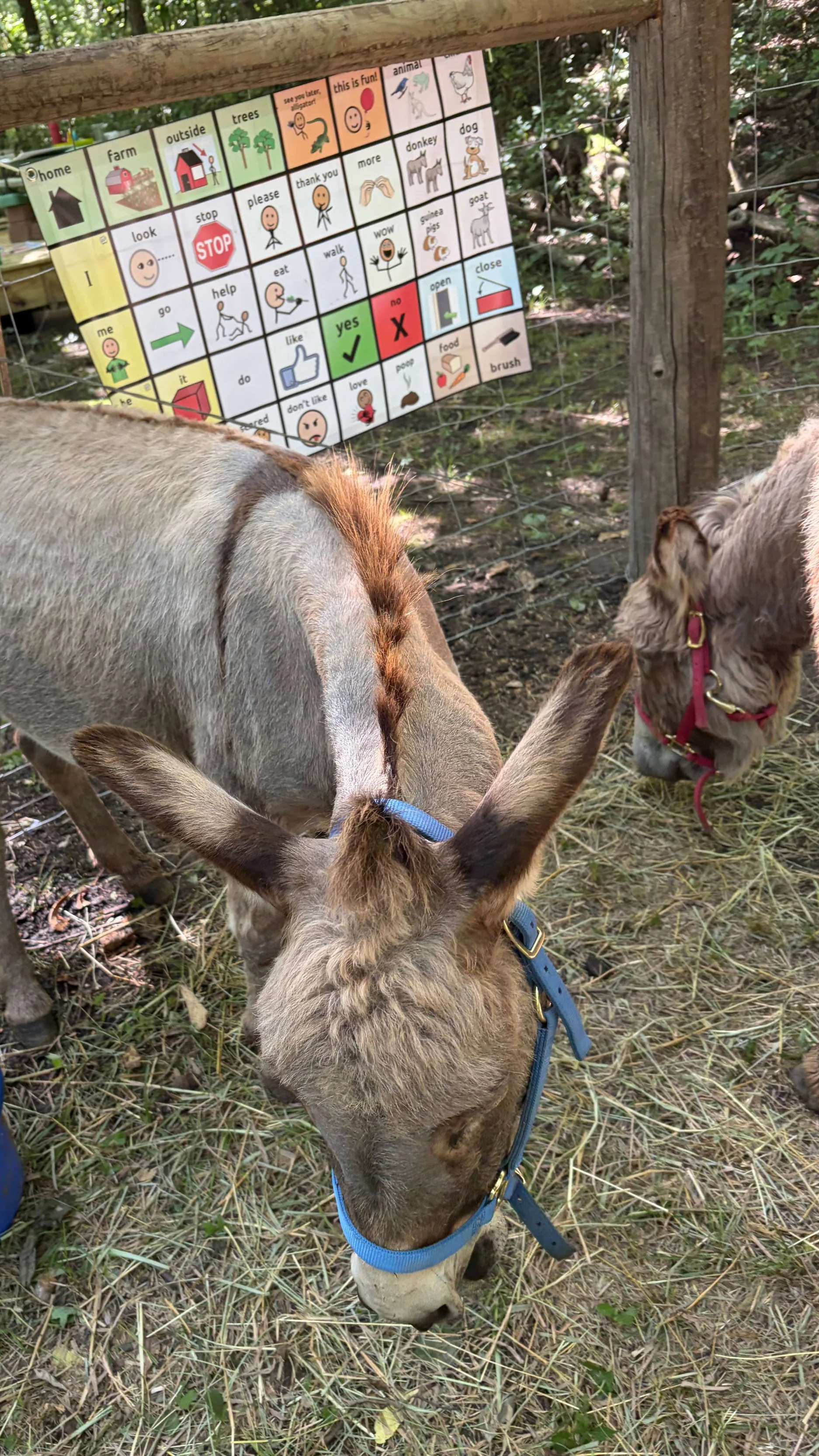
“Triangle model [clinician both handles animal and guides client] is what I am most accustomed to, but I got some experience with the Diamond model [one person handles the animal, another guides the client] this summer during AAC/summer camp sessions. I am so grateful for SLPs who were open to trying something new. They modeled AAC with the kiddo we were working with, as I talked everyone through the donkey's reactions and provided cues with my mini donkey, Joey.”
Her animal partners are her family’s personal pets and “I have young kids [so] they had so much exposure to unexpected movement and wild child behavior…I got really lucky that they had been so desensitized. It was very natural to engage with them as therapy partners when I was ready.”
However, there’s minimal information or guidelines available for working with these species. “I was in this weird place where a lot of people were not trying to work with farm animals.”
“AAAIP [Association of Animal-Assisted Intervention Professionals] was an excellent resource and they always attempted to come up with answers or get creative with me.
“Me trying to run my practice partially from my property was also another barrier. What insurance did I need? Would anybody even insure what I was trying to do?
“[And] to be honest, including all my farm animals is not the most efficient setting vs. a clean therapy room!
“I need to hike the donkeys and goats over to our corral up in our woods and make sure they have clean water and everything they need. Then, I have to set up activities and supplies for the session's plans.
“Similarly, when I take guinea pigs to classrooms, I always travel with popup barriers, treats, and cleaning supplies. People see me coming down the halls with armloads of prep materials throughout the day! ”
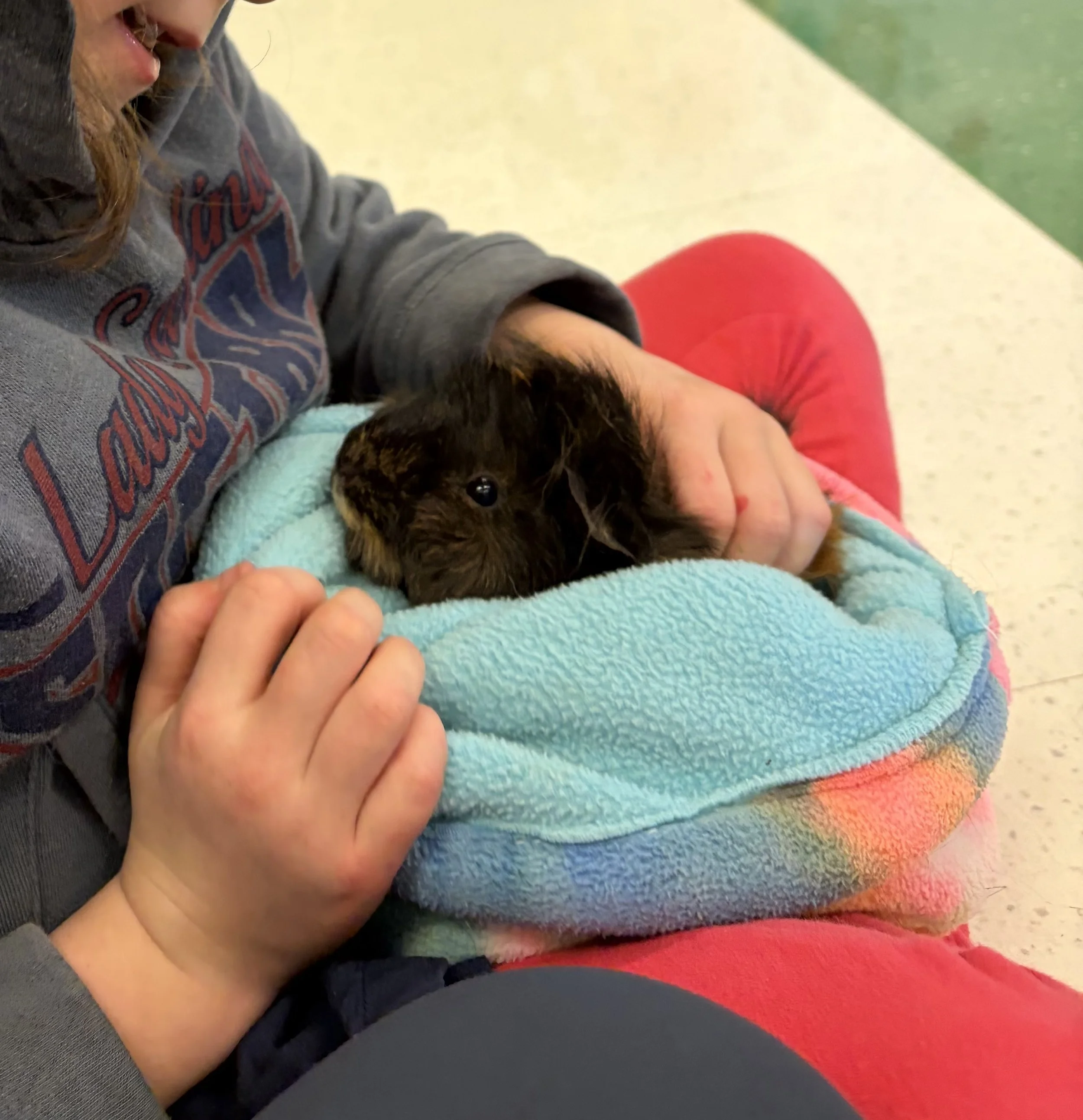
Kailey not only partners with donkeys and goats in her private practice, but with guinea pigs as well while providing school-based animal-assisted speech therapy.
For Tiffany, “the school… and the private practice [I am in] have never had therapy animals before. I feel like I am pioneering a new field without a lot of knowledge on how to do it exactly.”
She’s found there’s political aspects to trying to get supervisors on board and the documentation requirements, but no clear path of who to talk to about getting these decisions made.
Also, getting permissions to train in the facilities without yet having a certified animal has proven challenging.
The biggest concern has come from her special education director, who saw more liabilities and complications than benefits as she worked to gain permission to bring young Walter to school.
Fortunately, Tiffany got school board approval and Walter’s first day of work will be right before this post publishes!
Jennifer, who received Brandy through the non-profit organization Canine Companions, found waiting to be matched with her partner to be the most difficult.
“After I shared the possibility of bringing a facility dog to my school, there was a great deal of excitement among colleagues and students. It was difficult not to have updates to share during such a long and uncertain process.
“In hindsight, however, the wait reinforced how intentional and thoughtful the Canine Companions matching process is. It also made finally being matched with Brandy even more meaningful.
“My special education team had a little welcome party to celebrate her arrival. There was a giant sign hanging in our common space that said WELCOME BRANDY and everyone wrote a note on the sign! There were necklaces with Labrador retriever charms, and bone shaped cookies. It was really special.”
Finding support for learning animal-assisted speech therapy
All three providers mentioned the educational resources provided by Association of Animal Assisted Intervention Professionals and those provided by Speech Dogs to be instrumental in their journey.
Collaboration with other professionals was also key.
“A couple of people made all the difference for me by just not being territorial about their knowledge,” Kailey said.
Tiffany came to observe at Arlington Speech and Reading, where I partner with my therapy dogs. We had a great time together discussing the role Delta (in one of her last days at work) played in the progress of a couple of my more challenging kiddos and thinking about how her calmer energy was similar to that of pup Walter.
“I loved watching Sharlet working as a team with her therapy animal and patients. Her patients and their families clearly enjoyed having the therapy animal present.”
For Jennifer, having the in-depth training and ongoing support Canine Companions brings to their facility dog match-ups has been invaluable.
“During our first six months as a team, I participated in monthly check-ins with a graduate program director and a cohort of other new facility dog handlers. We shared experiences, problem-solved together, and learned from one another as we navigated bringing our dogs into professional settings.
“Canine Companions will continue to support Brandy and me throughout her working career, which is reassuring because this work is always evolving.
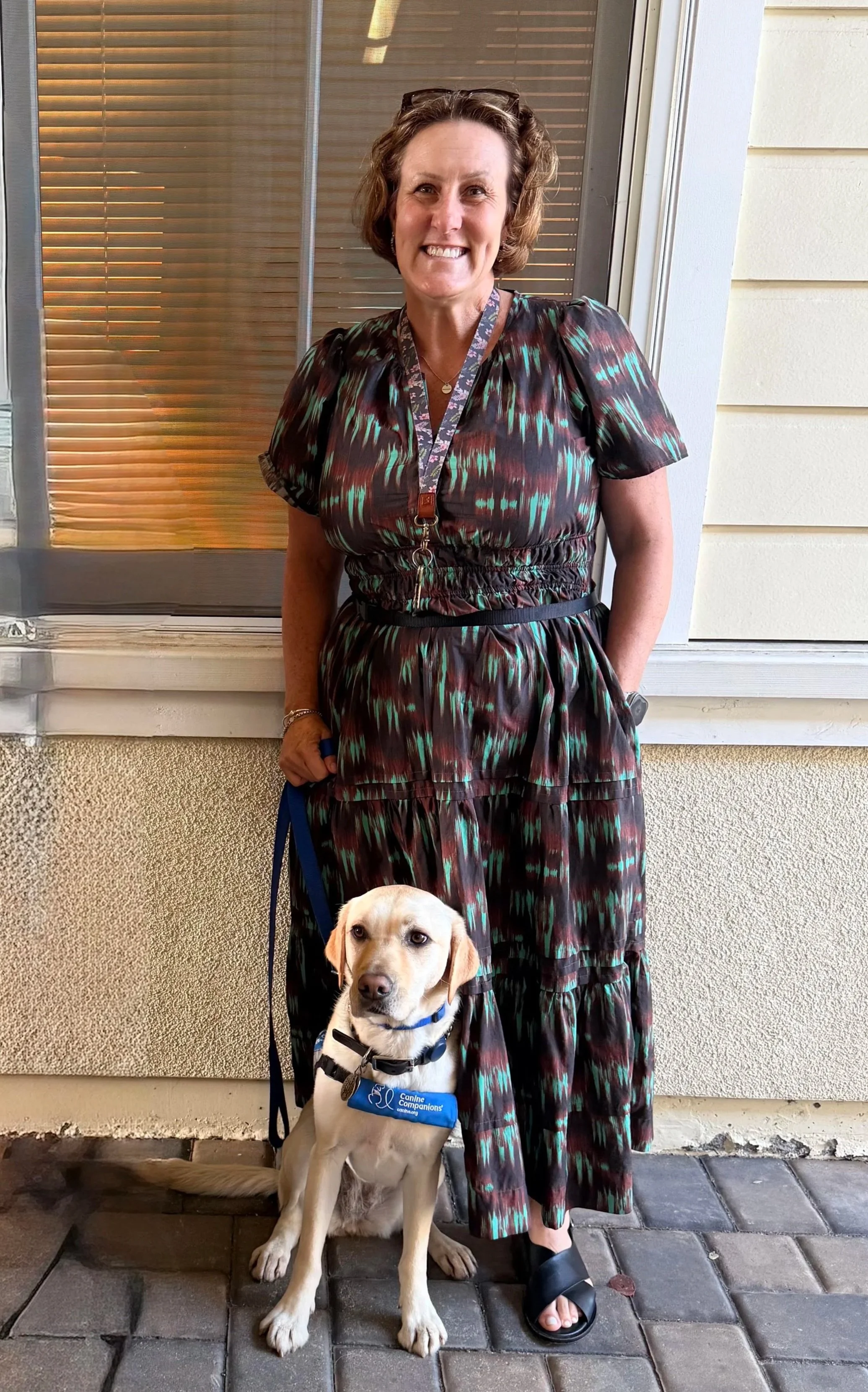
“My interest in partnering with a facility dog began …[when] I collaborated with a special day class teacher who partnered with a Canine Companions facility dog named Rhett.
“Seeing Rhett in action was incredibly impactful, and the experience stayed with me long afterward.”
Follow Jenn on Instagram @Brandythespeechdog.
“Observing an experienced facility dog handler over multiple summers was equally important. It allowed me to see how a handler managed the dog’s needs while simultaneously supporting students and maintaining the goals of the educational environment.”
The joys of partnering with a therapy animal
So has all this extra work been worth it?
The initial experience has been “so stressful! There are so many ways to get stressed when there is an extra (less controllable) factor in your therapy sessions,” Kailey said. “[Though] as I work more with both guinea pigs and farm animals, I get better ideas on what could deepen the interactions and make it more successful for both parties.
“Animals break the ice. They can be so calming and certain animals can actually be alerting or inspire curiosity.
“Every animal brings a different personality and part of being skilled at working with animals is trying to pair an individual with an animal who may bring out something new or different for them. ([And] Hiking with donkeys up to our deck we built in the woods with a corral next to it is a hoot!)
“Animals being regulating for individuals is something that I see consistently though.”
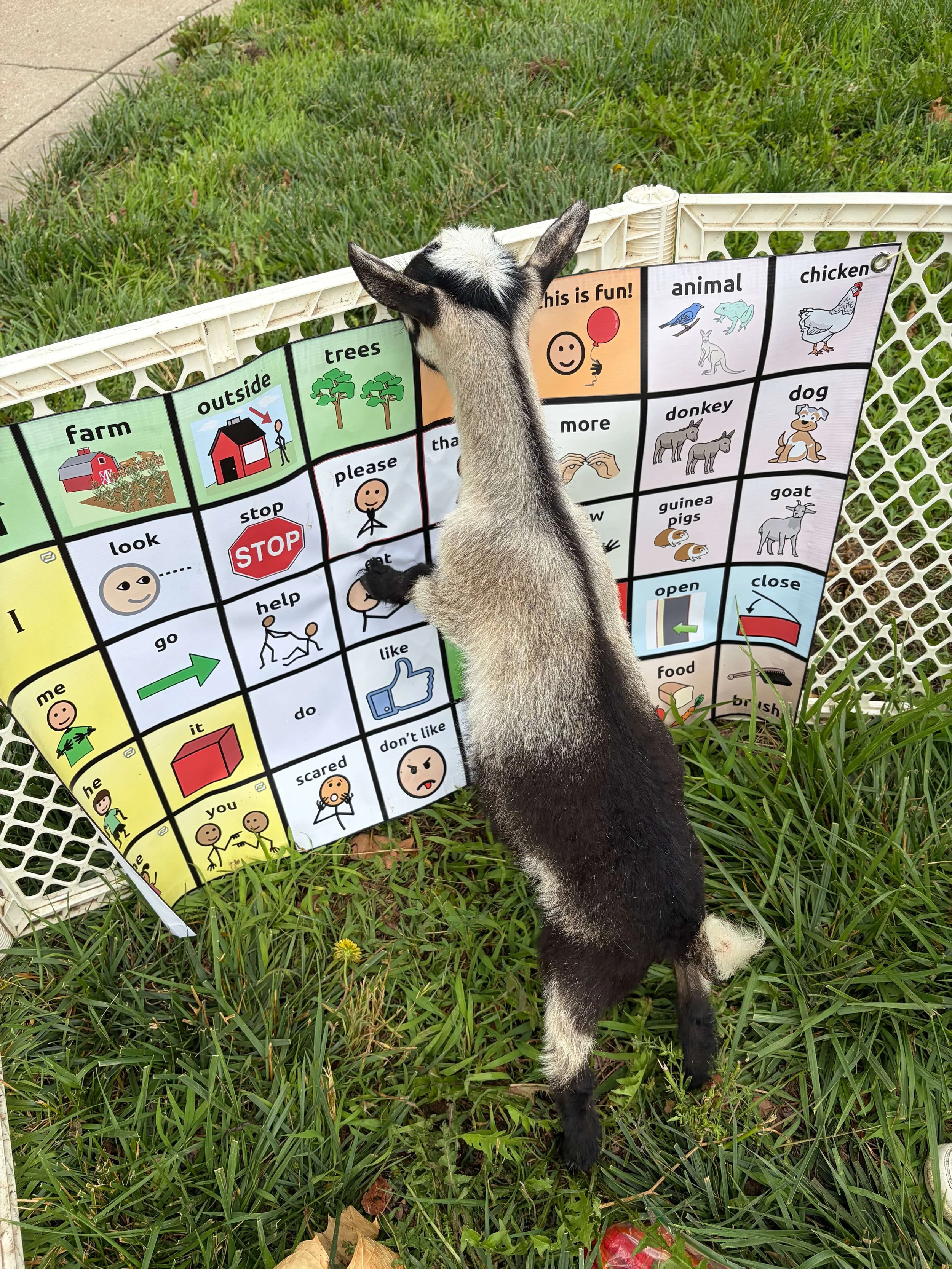
“I did not take this on until I had been practicing a solid 10 years. For me, I felt that foundation of being very comfortable in many therapeutic settings was essential in order to then add in the animal component. I am at the beginning of my AAT journey, so even that one day a week can feel really overwhelming.” Follow Kailey on Instagram @rewildingspeech or go to rewildingspeech.com
She also notes that her students at the middle school are more interested in her role now that there’s guinea pigs to engage with. “Not even just the kids I see- I’m getting to know so many others. My office went from being the place that no one exactly knows why I’m there or what kids see me, to being the guinea pig lady! Almost every kid I encounter is at least laughing at them, if not regulated by them”
Jennifer said, “The initial experience of integrating Brandy into my work was exhilarating, meaningful, and also more complex than simply adding a dog to a therapy session.”
“I quickly learned that successful animal-assisted intervention requires me to attend simultaneously to the student’s goals, the flow of the session, the environment, and Brandy’s physical and emotional well-being.
“My previous coursework and observations gave me a strong foundation, but partnering with Brandy has helped me understand the work at a much deeper level. Her involvement must always be thoughtful, purposeful, and connected to a student’s individual needs.
“Sometimes she takes an active role in an activity, such as responding to a command, retrieving an item, or providing a motivating context for communication. At other times, her calm presence is the intervention.
“I have also learned the importance of allowing our partnership to develop over time. Brandy and I needed time to learn one another’s communication, rhythms, and needs.
“I have become increasingly aware that the true power of the work depends on honoring Brandy as a working partner and not viewing her simply as a therapeutic tool.”
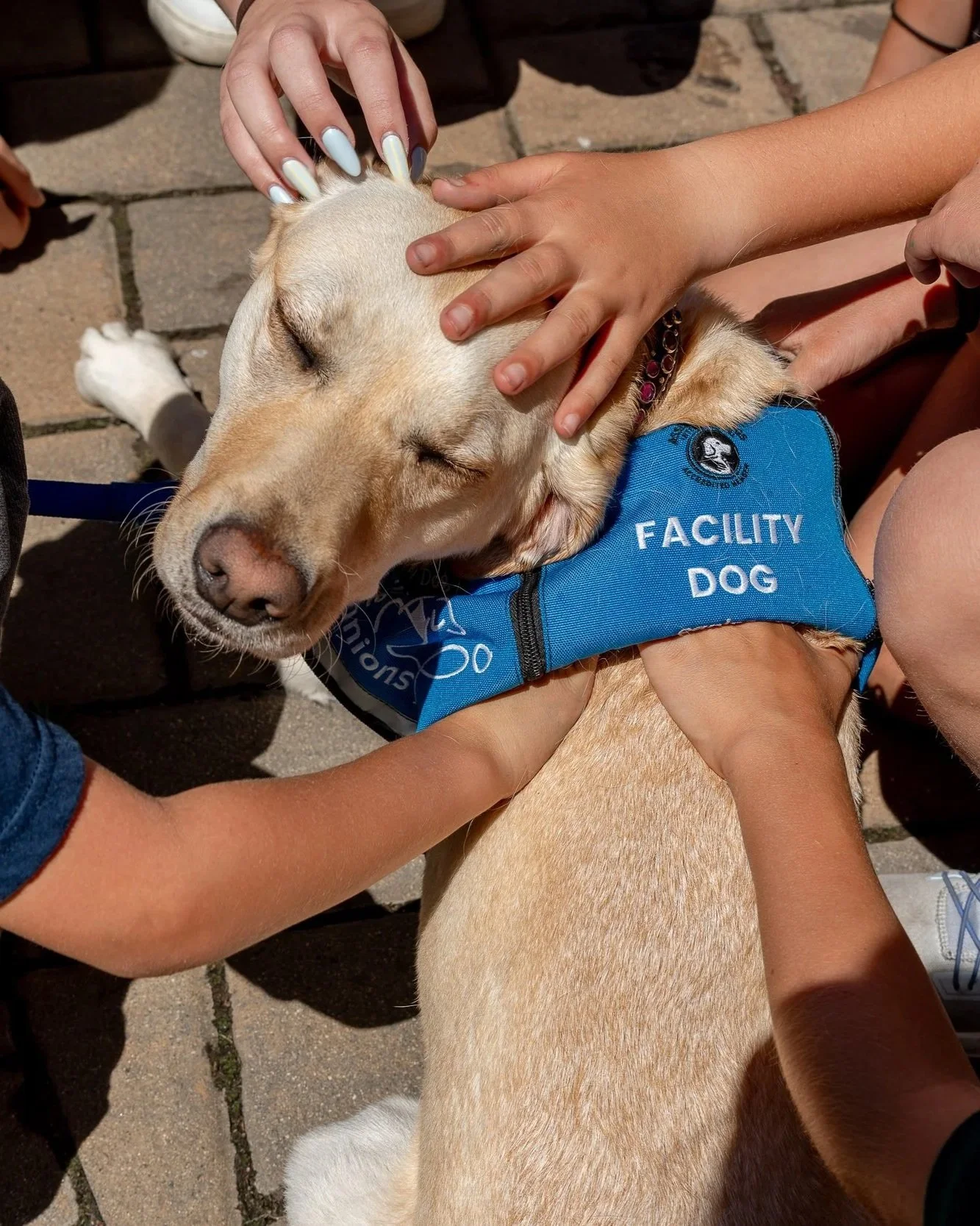
“Initially when Brandy started, I didn’t place additional demands on her for interaction; I allowed her time to settle into the therapy space and get used to students and staff coming in and out. I slowly increased my requests for her engagement, and learned to pay attention to her body language,” Jenn noted.
What’s next for these animal-assisted speech therapy providers?
So what lies ahead for these new AAT providers as they settle into their new professional niche?
“I anticipate being able to bring a positive impact to multiple people and environments,” Tiffany notes. “I hope to have an even more fulfilling career for me and my therapy animal.”
Kailey echoes her sentiment about finding a more fulfilling career with the addition of animal-assisted therapy. “I think maybe the best summary would be that the career I love felt a little two-dimensional at times. Now, it feels like it came alive for me, and I hope my clients.
“It has been the sweetest way to continue learning and deepening my career. Animal joy for all!”
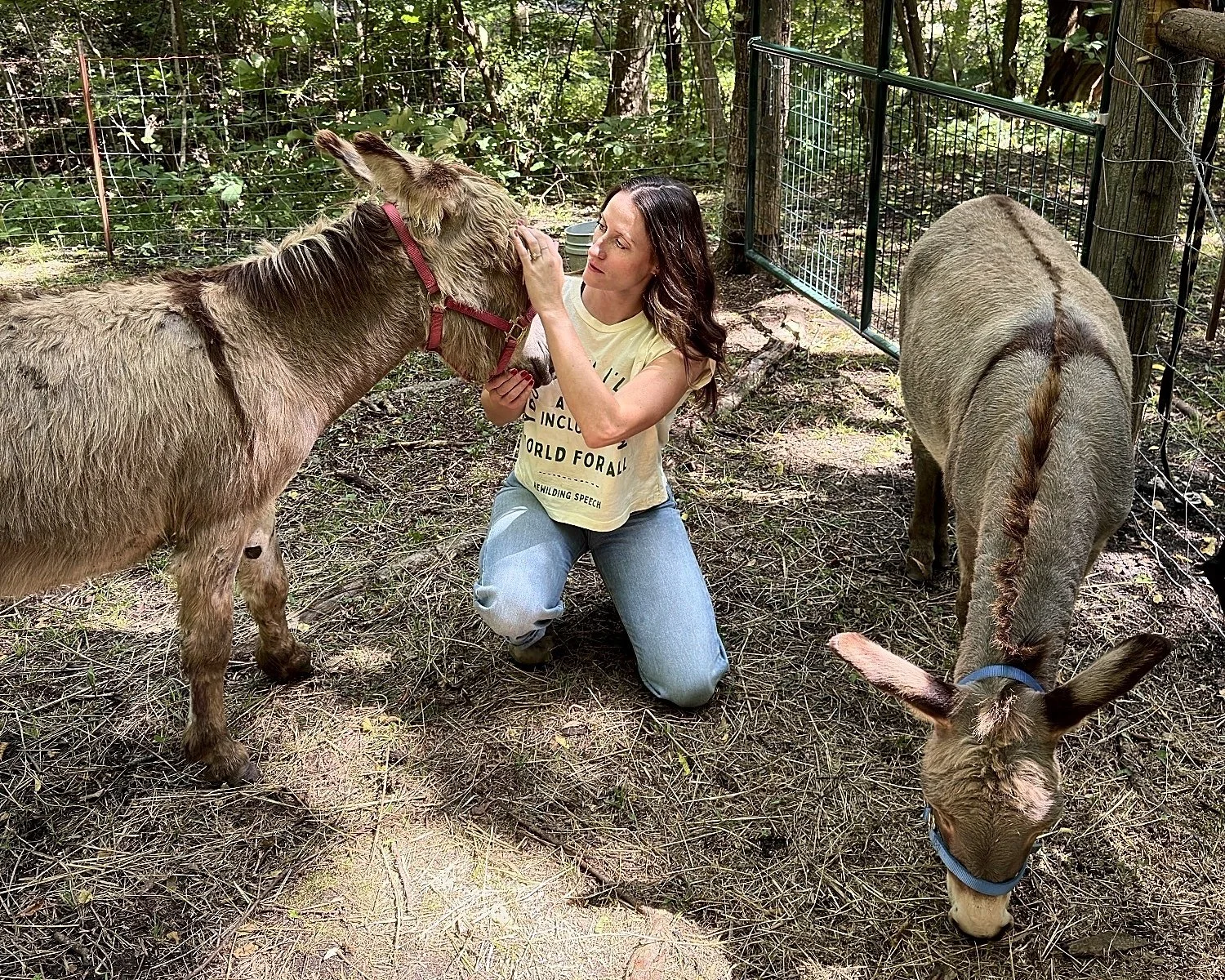
"In truth, this is an area where I feel less capable because I want to feel like I've mastered it before talking about it. But you have to do it to master it...it's cyclical" Kailey noted about “tiptoeing” into animal-assisted speech therapy.
Jenn looks forward to continuing to develop intervention activities and collecting information about Brandy’s impact to “better understand which students and activities benefit most from her involvement.
“As our partnership grows, I would like to share what I have learned with other speech-language pathologists, educators, and professionals who are interested in working with facility dogs.
“I hope our experience can help others understand both the tremendous benefits and the significant responsibilities involved in this work.”
If you’re ready to take the next step toward becoming an animal-assisted therapist, I have some resources for you depending on where you are in your journey:
· just curious to learn more of what animal-assisted speech therapy is about? Check out my appearance on the Speech Link podcast with Char Boshart, my recent webinar presentation for Washington Speech-Language Hearing Association (both available for ASHA CEUs), or Welcome to Animal-Assisted Interventions: The What and Why of AAI on the Speech Dogs YouTube channel.
· ready to dive deeper? Explore the book Paws for Progress: Integrating Animal-Assisted Interventions Into Your Speech-Language Pathology Practice or the self-paced, online course Paws for Progress: Foundations for Therapy Animal Inclusion in a Professional Setting.
And as always, don’t hesitate to reach out to me with questions via sharlet@speechdogs.com
May your day be filled with puppy wiggles (or guinea pig cuddles, goat snuggles, donkey nudges) and children’s giggles,
Sharlet