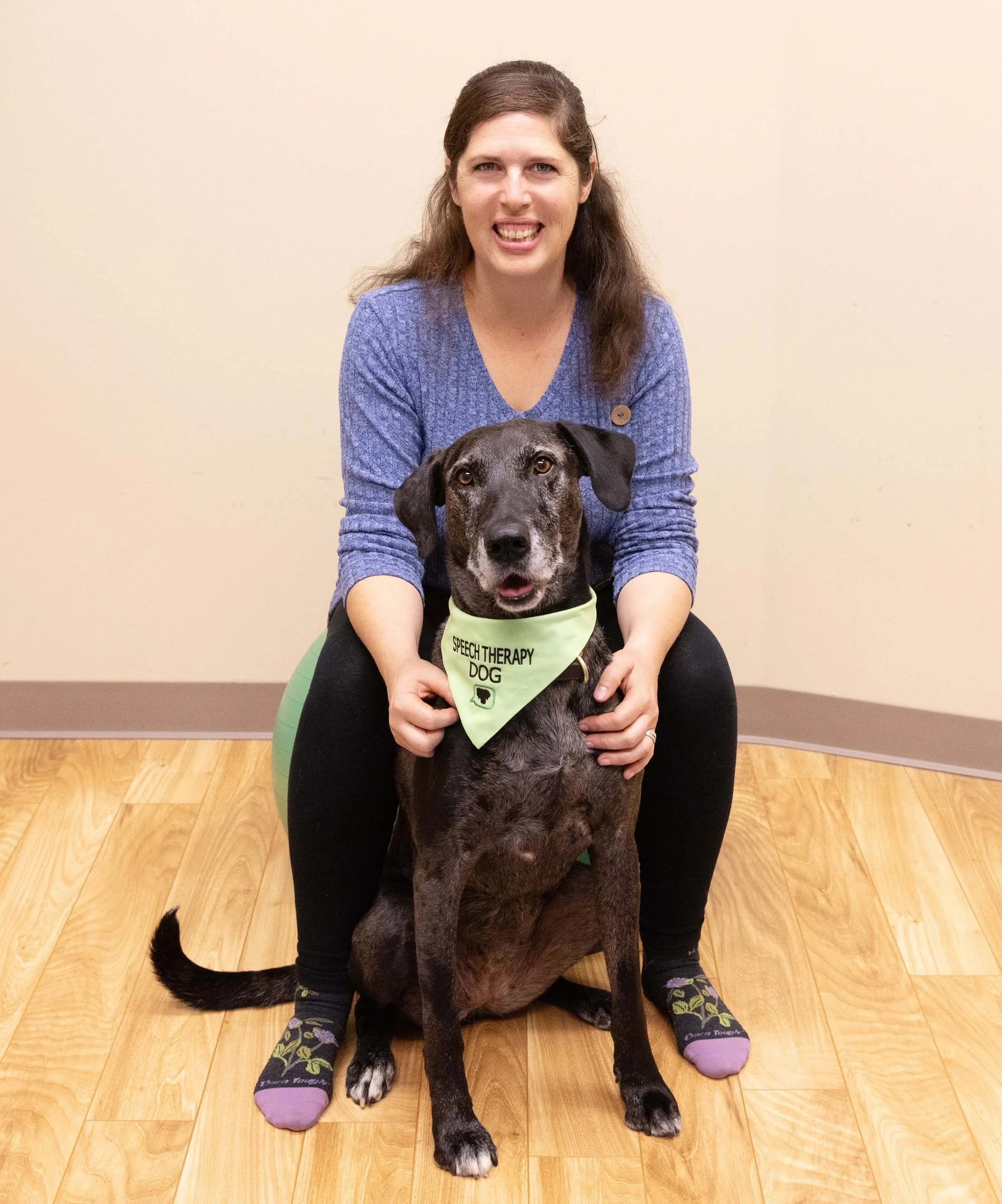
Dear Delta… Lessons Learned About Animal-Assisted Speech Therapy
Dear Delta,
I’m typing this with you in your customary location, glued to my side with the occasional grumble if I shift too much, a true “velcro dog”.
Your graying muzzle rests on my thigh as I twist to work the laptop settled on the couch arm so as not to usurp your preferred resting place.
At nine and a half I know our working partnership is in its sunset phase, but the legacy of your teaching shines through in little Sky, young Zephyr, and the countless hearts you have touched.
My life changed the day you arrived, scrawny and awkward and seemingly colossal next to the little spaniel and Beagle that made up our dog-family at the time.
I hope you realize how much I love you and how much I wish I could have been the perfect dog guardian from the get go.
But you have taught me more than anyone how to be both a dog mom and a canine-assisted therapist.
Here are just a few of the lessons you’ve given me…

Delta (before either of us had ever heard the term animal-assisted speech therapy) with one of her pups prior to adoption.
If you click a link, it may be an affiliate link and I will earn a small commission. If I don’t use and love a product, you won’t find it here!
Lesson #1. Building a bond first
When we first adopted you, we didn’t know exactly what we were getting into. Unfortunately, the rescue organization your dad and I went through either wasn’t totally honest or wasn’t proficient in evaluating dogs in their care (or both), so they described an outgoing, happy dog ready for anything.
Big red flag number one—we had to put a sizable down payment towards your adoption fee before they would even schedule a meet and greet.
Big red flag number two—While we were originally scheduled to meet you at your foster home, they changed the location with only a day’s notice to an adoption event at a pet store.
Even though I tried to tell myself we weren’t yet committed to you—this big, gangly girl who had recently had a litter of pups—in my heart I already considered you ours and was terrified you would be adopted out to someone else before we could even get there.
Upon arriving at the event you were stand-offish, nails scrabbling against the linoleum as you resisted being led away from the other adoptable dogs.
We tried unsuccessfully to walk around together and get to know you, but you wouldn’t accept treats or cajoling.
While you appeared quiet and did not whine or try to get away, in reality you were shut-down, something I would quickly learn was your go-to state when stressed.
But…human emotions being what they are, we felt obligated to take you home. Frankly, I felt sorry for you and couldn’t stand the thought of leaving you behind.
Our long process of mental rehabilitation and bonding lay ahead!
Here is where the real lesson kicked in. I started taking you to classes almost immediately after adoption, before we had much chance to bond and for you to settle into your new family life.
I wish someone—anyone—would have suggested waiting a few months to develop more trust better before I repeatedly put you in stressful situations.
While you already knew basic obedience, I was of the mindset that “more is better” when it came to socialization and brought you along everywhere I could to expose you to new sights, sounds, and people.
Going catatonic was rare, but it did happen, especially when you were startled by loud noises. I didn’t yet know about trigger stacking and flooding and the emotional toll the repeated stressors took on you.
I did my best to create positive associations with outings, but it felt like a constant battle of two steps forward, one (or two!) steps back.
Fortunately, you did ultimately improve tremendously.
You still get nervous in new places so I don’t generally take you into town anymore, only to nature areas that are quiet.
Now that we have the AAAIP Therapy Animal Team Skills Evaluation where we can be assessed in our office where you feel as confident as if it were your second home, I don’t feel the pressure to try to make you more sociable in public places.
I have learned so much through our experiences—combinged with taking coursework on dog training and psychology—that I wish I had a do-over. I’d give you several months to settle in at home and then very gradually expose you to new places for very brief periods of time (versus throwing you into a one-hour class in strange location). And I’d put several days between outings initially to allow your stress hormones stress hormones to settle down before trying again.
(For a deep-dive on this topic, check out The Stress Factor in Dogs by Dr. Kristina Spaulding.)
Despite the challenges, I did truly enjoy the process of rehabilitating your confidence and would consider adopting an anxious dog again in the future for a personal companion. While it worked out well in the end for us, largely thanks to your amazing inherent resilience, at this point in my career I’m not interested in the “hope and a prayer” method of finding another therapy partner.
Selecting any dog for animal-assisted therapy is a gamble, but starting with a more confident, outgoing dog certainly improves your odds.
That said, I wouldn’t change our experience for world!!!
Lesson #2. Obedience versus Agency (aka “letting opportunities happen”)
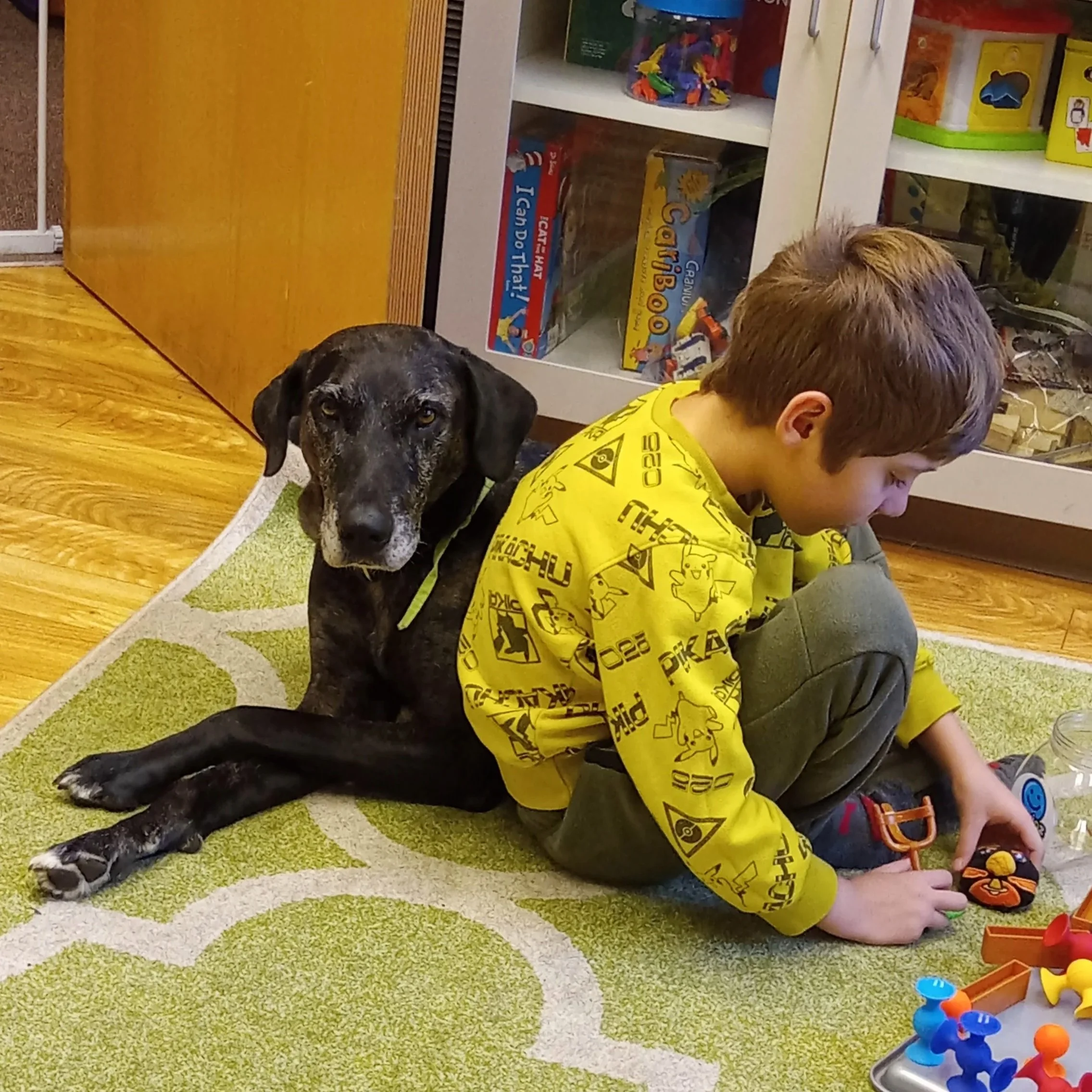
When allowing Delta to choose where she goes during a session, she often opts to be close to more anxious or resistant kids. Her calming presence then helps me be more productive within an otherwise challenging session.
I used to think a therapy dog had to be obedient above all else. I envisioned interminable down-stays, a faultless “leave it” response, and impeccable responses to all kids of cues.
Well, let’s just say the smiles you bring to children’s faces as you do all kinds “imperfect” things has cured me of that notion!
I appreciate the times you do as I ask, but I’ve also learned to trust that often you actually do know better than I what is needed in the moment.
So if you want to go lie on your bed, you go for it.
And if you’d prefer to stay close by, I’ll take that, too.
In fact, I’ve found you often give me clues about either the client’s or my own mental state with your unique signals, and if I watch you I can better adapt my plan.
Sometimes it’s your vocal grumbling to insist a child pet you when they’re starting to feel overwhelmed by an activity, either because I failed to clearly explain the expectations of the task or because it’s just one too many requests after an already stressful day outside of therapy.
Other times it’s your pushy behavior that draws my attention to the fact that I’m feeling anxious about how to engage a more challenging child and I need to take a breath and pause.
While these unique cues aren’t found in any traditional lists of dog signals, you communicate clearly with them nonetheless.
More importantly, I’ve seen your stamina for days of therapy sessions improve as I’ve allowed you more and more agency to choose when and how you interact.
I’ve also reveled in the happy compromise of managing some of your more “interesting” behaviors rather than performing endless training sessions to make things seem perfect.
Barking when someone new comes to the door? So much easier to just meet new families in the parking lot or be prepared to distract you with treats as they first arrive.
Getting overly excited around when little ones run around out of control? A sunflower butter filled Kong in your retreat space gives us all enough time to settle a bit before interacting.
And chewing on their pens as kids try to write while sitting on the floor alongside you?…well, I’m still scratching my head on that one, but the kids think it’s hilarious so we make it work!
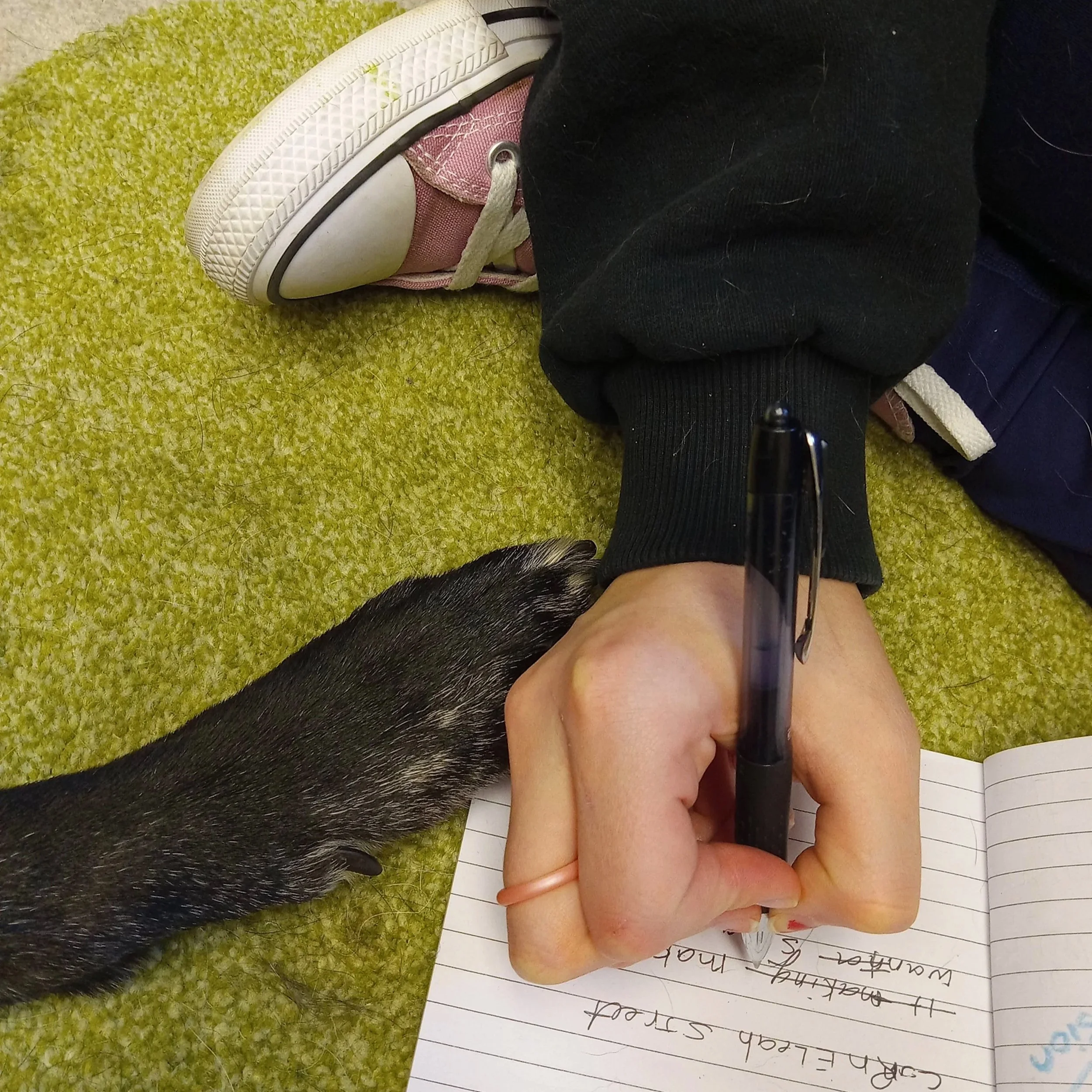
While she can be quirky, moments like this one capture speech therapy dog Delta’s supportive nature.
Lesson #3: The Mental Taxation of Animal-Assisted Therapy
Oh, to return to my naïve days of thinking all therapy sessions were the same.
I’ve seen how certain kids impact your emotional well-being—for both better and worse—more than others.
Whether that’s the occasional depressed state you show when a child has been especially dysregulated over the course of a session or the physical fatigue you show after certain very high-energy kiddos keep you engaged with constant attention.
I also see you pine away, staring at the door in anticipation of particular favorite kiddos even when I try to communicate to you they have cancelled that day’s session. While I’d rather you were taking to chance to rest, sometimes there’s just no tearing you away from the door.
Or the level of vigilance it must take for you to hear those kiddos pulling into the parking lot. There’s not doubt in mind that you know the sound of certain cars and get excited in anticipation of greeting those little ones!
(And sometimes their parents as well—remember the dad who you should have been afraid of given his massive size and deep voice, but you knew every session he brought along special treats to share because he loved you so much?)
And I apologize it took me a couple years to learn that I didn’t need to volunteer your love to strangers in the office lobby. I know now that you need break times to be true break times, even when people do ooh and ahh over seeing such a beautiful dog prancing through the halls.
While we AAT professionals can track all kinds of data on how hard our furry partners work, I don’t think we will ever capture the full extent of mental effort you use throughout the day.
Where we go from here
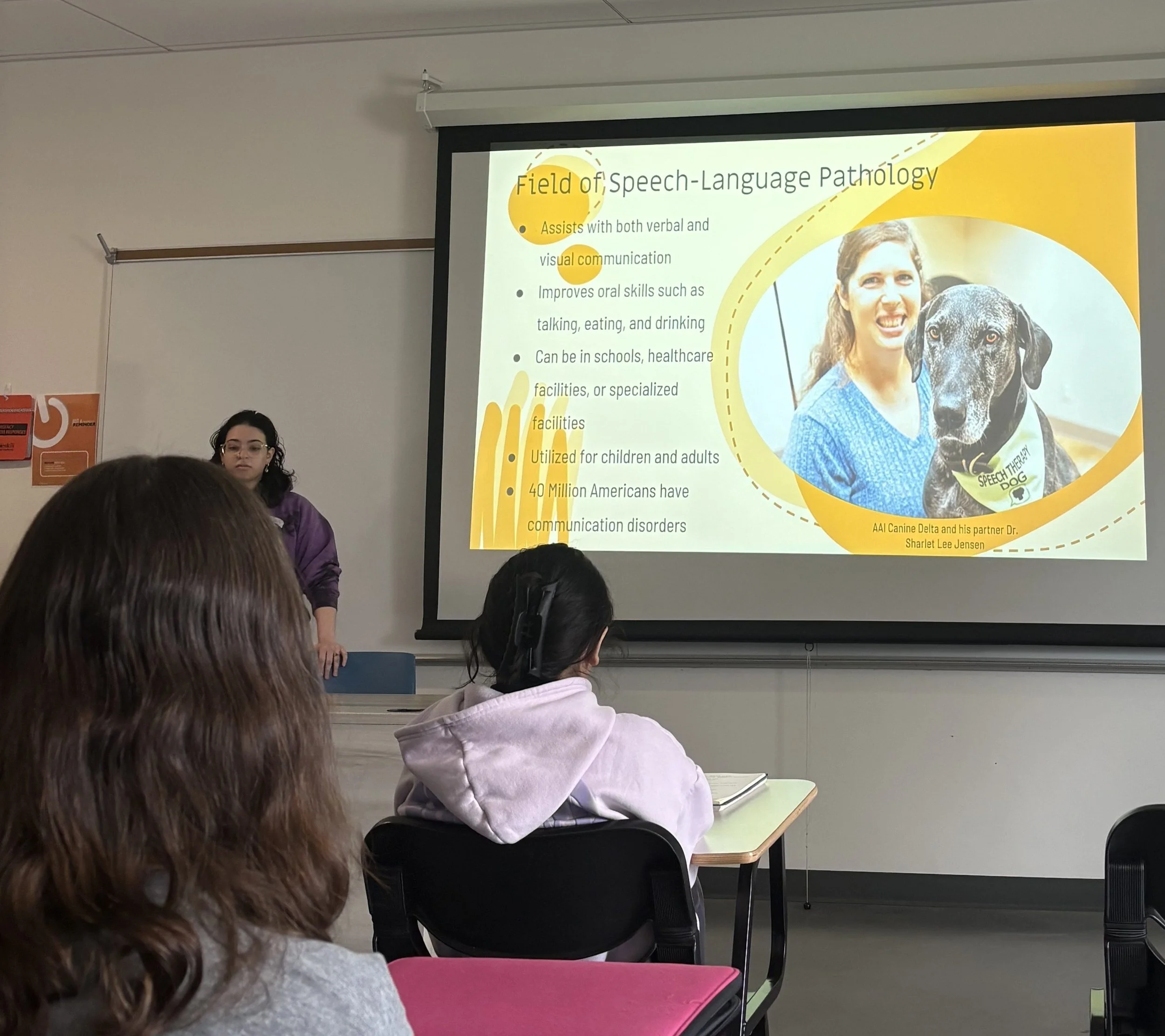
A student at SUNY Cobbleskill uses Delta as an example in her presentation on animal-assisted speech therapy for a course in Canine Training and Management.
Delta, the lessons you’ve taught me go well beyond just our clients. You’ve inspired others to try this challenging, amazing, life-changing practice of including the human-animal bond into therapy sessions.
I’m looking forward to working alongside you for as many more months or years as you grant me. I’ll do my best to follow your lead and we navigate retirement (for you) and professional transitions (for me).
I’m so happy to have been gifted with Sky and Zephyr to continue your legacy of animal-assisted speech therapy. Who knows if there will be more therapy dogs in my future, but for now I will focus on making your senior years the best they can possibly be.
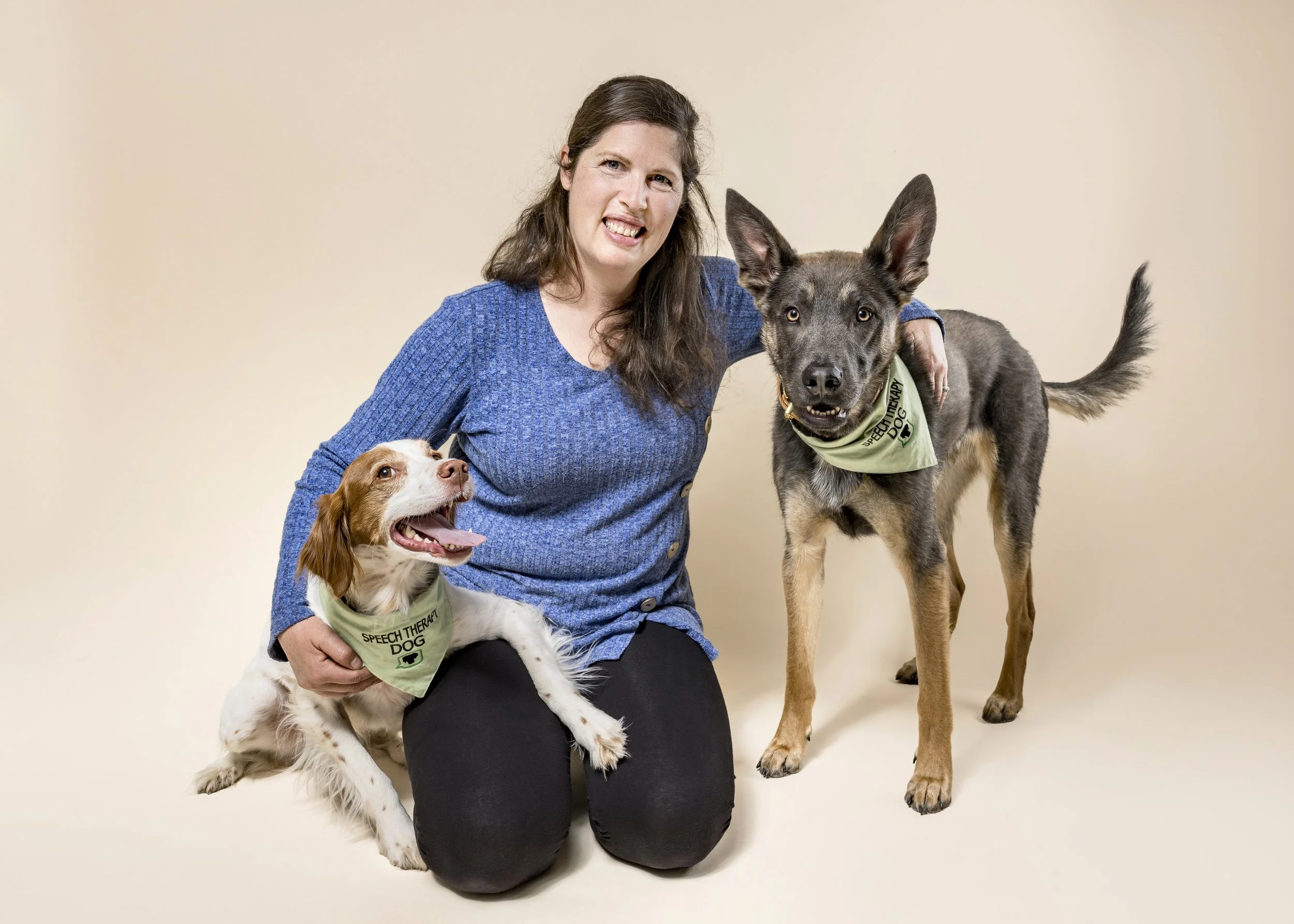
Younger speech therapy dogs Sky and Zephyr have benefitted immensely from the handling skills Delta has taught me over her career.
All the love in the world,
Your mama and partner, Sharlet