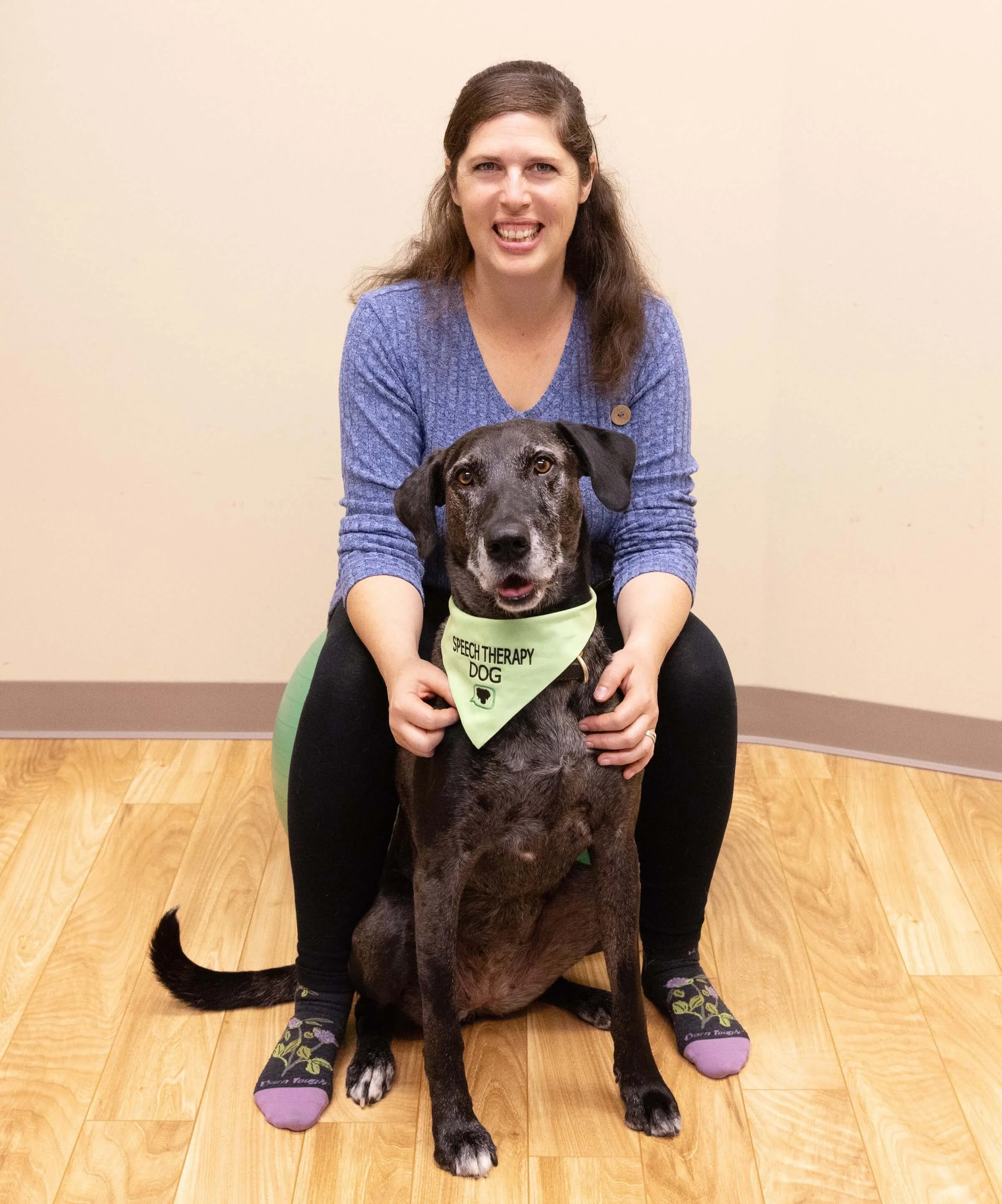
Transforming My Work: How a Speech Therapy Dog Helps Me Be a Better Clinician
I heard the three-year-old boy coming down the hall, screaming and running and clearly unhappy to be here today.
A brand-new addition to my caseload, our first session had been one of the more challenging I’d encountered in a long time. He had been overwhelmed by the new environment and I had struggled to calm or engage him in any meaningful way while he ran to the door repeatedly and scratched at me if got too close.
While his parents noted he loves dogs, because of his dysregulated behavior I had chosen to close Delta in my inner office and focus fully on the boy rather than split my attention to ensure she was staying safe.
Our second session was going a little better, but I could see transitioning back out of the building at the end was going to lead to another outburst. Fortunately, his mother made a fantastic suggestion—perhaps he would be willing to follow Delta to the car.
From the beginning I have capitalized on my therapy dogs’ strength at calming kids by letting them “help” me walk the dogs outside for transitions, but because of the complexity of this boy’s needs it hadn’t occurred to me he might benefit from this simple activity as well.
Bingo!
He wasn’t interested in holding the leash because he would have to set down the little toys he keeps clenched in his fists, but he was transfixed by Delta’s slowly swishing tail as we walked down the hall and out the main doors.
Now, just a few sessions later, we’ve established this routine. I even met them in the parking lot to help successfully transition into the building a couple times, but because he now seems to have a positive association with coming to speech we can greet each other at the office door instead.
He’s even been willing to momentarily shift a toy to free up a hand and hold the leash for a few steps.
Delta’s contribution to this interaction seems so small but was yet so intangibly helpful. In fact, I’ve found partnering with a speech therapy dog has actually enabled me to be a better clinician for three main reasons:
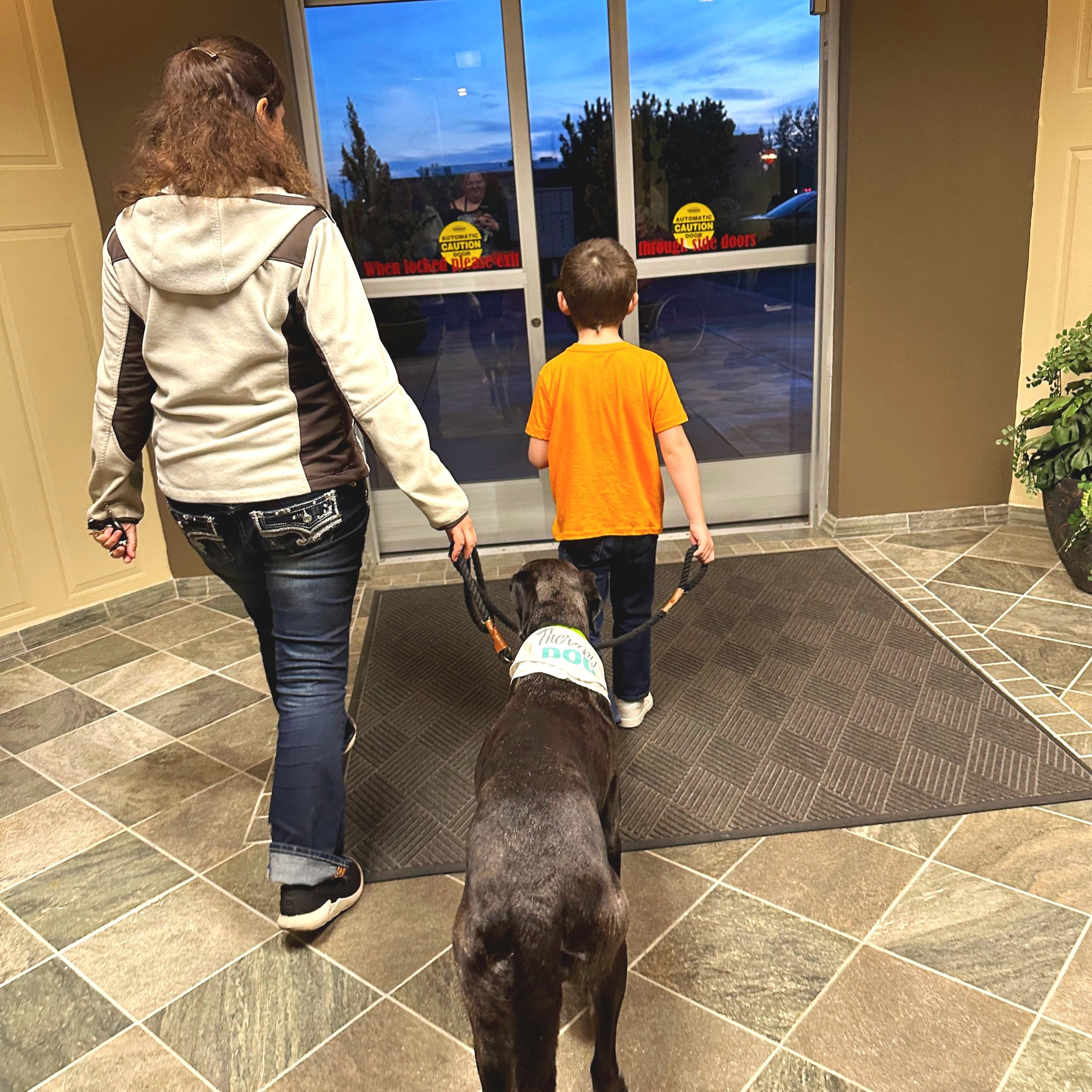
Speech therapy dog Delta helps a child transition calmly out of an animal-assisted speech therapy session, just one of the ways she helps me build and maintain rapport with clients.
If you click a link it is likely an affiliate link and I will earn a small commission if you purchase. It doesn’t cost you anything extra. If I don’t use and love a product, you won’t find it here!
#1 A speech therapy dog is a bridge to build rapport
This was my primary goal when I first brought Delta to work all those years ago. Like the situation above, I had just wanted a few minutes of joyful connection with a child who hated coming to speech therapy. (See My Journey to Animal-Assisted Speech Therapy).
Though even the best therapy dog is not a magical solution for all challenges, I have found overall that being able to bond over the mutual enjoyment of dogs helps reduce many children’s fight or flight response.
Later on the therapy dog provides a neutral topic we can turn to whenever stress levels rise to curtail an impending outburst and end a session feeling calm and ready to try again next time.
#2 Increased options for therapeutic activities
Speech therapists are notorious for collecting a lot of therapy supplies. It’s easy to find yourself flipping through catalogues looking for just one more game to work on /s/ or one more book to elicit /r/.
Once I started incorporating animal-assisted therapy I found I could rely on a smaller collection of therapy materials because kids would stick with them longer if we included the dog through:
· a “turn and tell”—the child has a meaningful reason to practice a target multiple times with you before going to the therapy dog to show off their new word or phrase
· playing on a team with or against the therapy dog—some kids light up at the idea of “beating” Delta at a board game, or alternatively think it’s hilarious to be Delta’s voice as they team up against me. Positive emotions lead to increased motivation to practice and greater likelihood they’ll retain a memory of the task for later
· retelling a story to the therapy dog—get in one more practice in a way that doesn’t feel like drill and can help generalize a skill to a slightly different context. A therapy dog can even be resting when kids are told dogs can listen with their eyes closed
· taking pictures of doing an activity with the therapy dog to show parents at the end of the session further encourages recall and extra practice opportunities
As a side benefit, owning less materials means it’s easier to keep everything organized for set-up and clean-up, making a work day just a little less hectic.
(For my favorite books and games to play during animal-assisted speech therapy sessions, check out the Animal-Related Engagement page.)
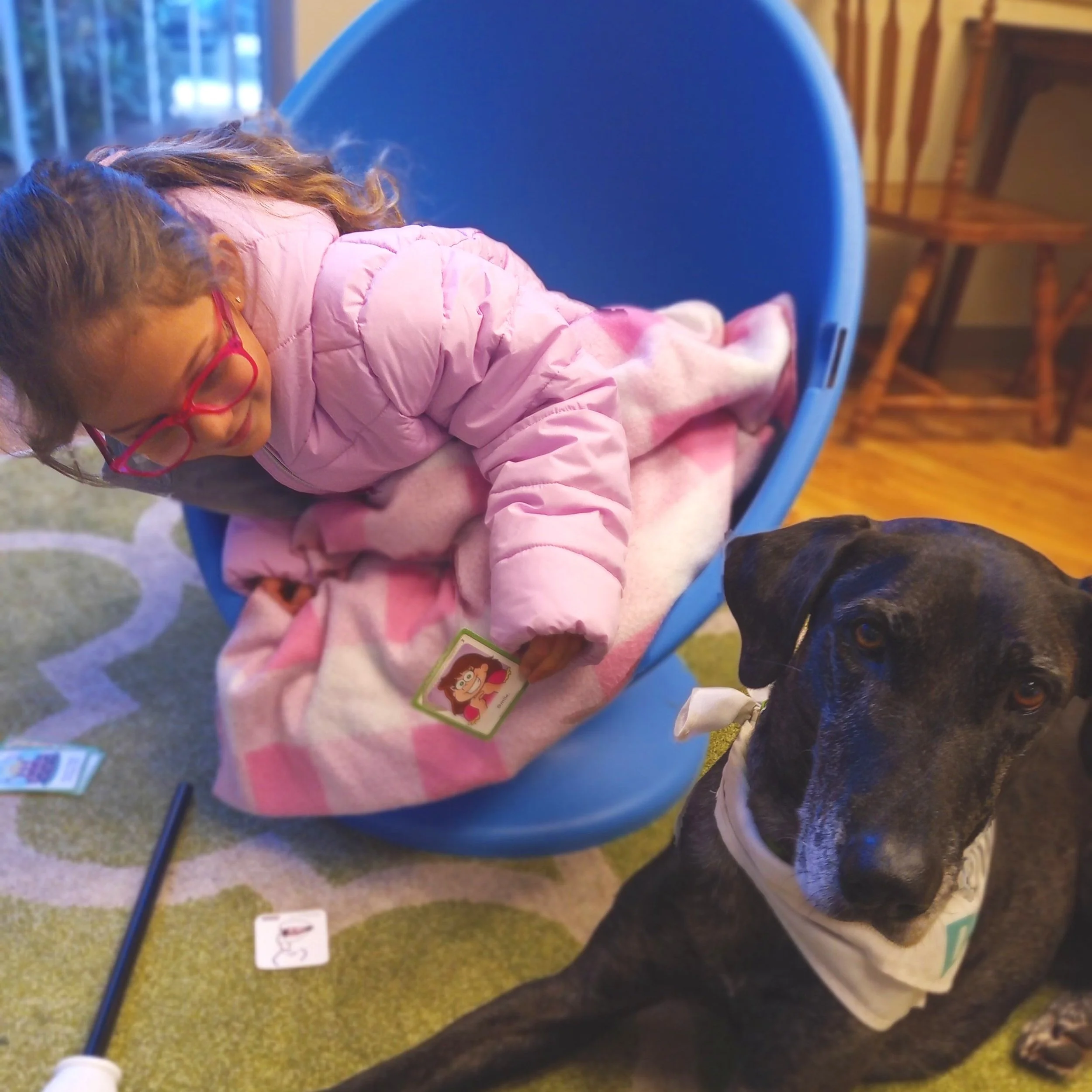
A preschooler “turns and tells” therapy dog Delta a targeted word. An animal-assisted speech therapy strategy to increase practice repetitions in a meaningful way, the turn and tell is just one way therapy dogs help clients succeed.
#3 “Animal-assisted laughter” and breaks in your work day
Mindfulness is a popular word these days, but I didn’t really understand how it applied to a job until I started to reflect on how my speech therapy dogs improved my work day.
Seeing Delta rest her head on a child’s lap when they are having a difficult day, sharing laughter when Sky leaps to retrieve a ball that escaped from the ball pit, remembering Johnny Utah’s happy sneezes as he greeted families at the door all bring moments of joy. The dogs also help give me:
· a reason to get up from my desk and walk outside in the fresh air multiple times a day
· the ability to reach down and pet a dog to calm myself when a session is becoming stressful
· encouragement to leave work on time and thus have a better work-life balance
On the toughest of days, when an unexpected personal loss left work the last place I wanted to be, having an empathetic dog looking in my eyes and lying at my feet made it bearable enough for me to show up for my clients.
Therapy dogs are not magic. They will not fix every speech therapy challenge you face. And they will bring added responsibilities to your work. But given all the ways they help me be a better Speech-Language Pathologist, I wouldn’t trade the experience for anything.
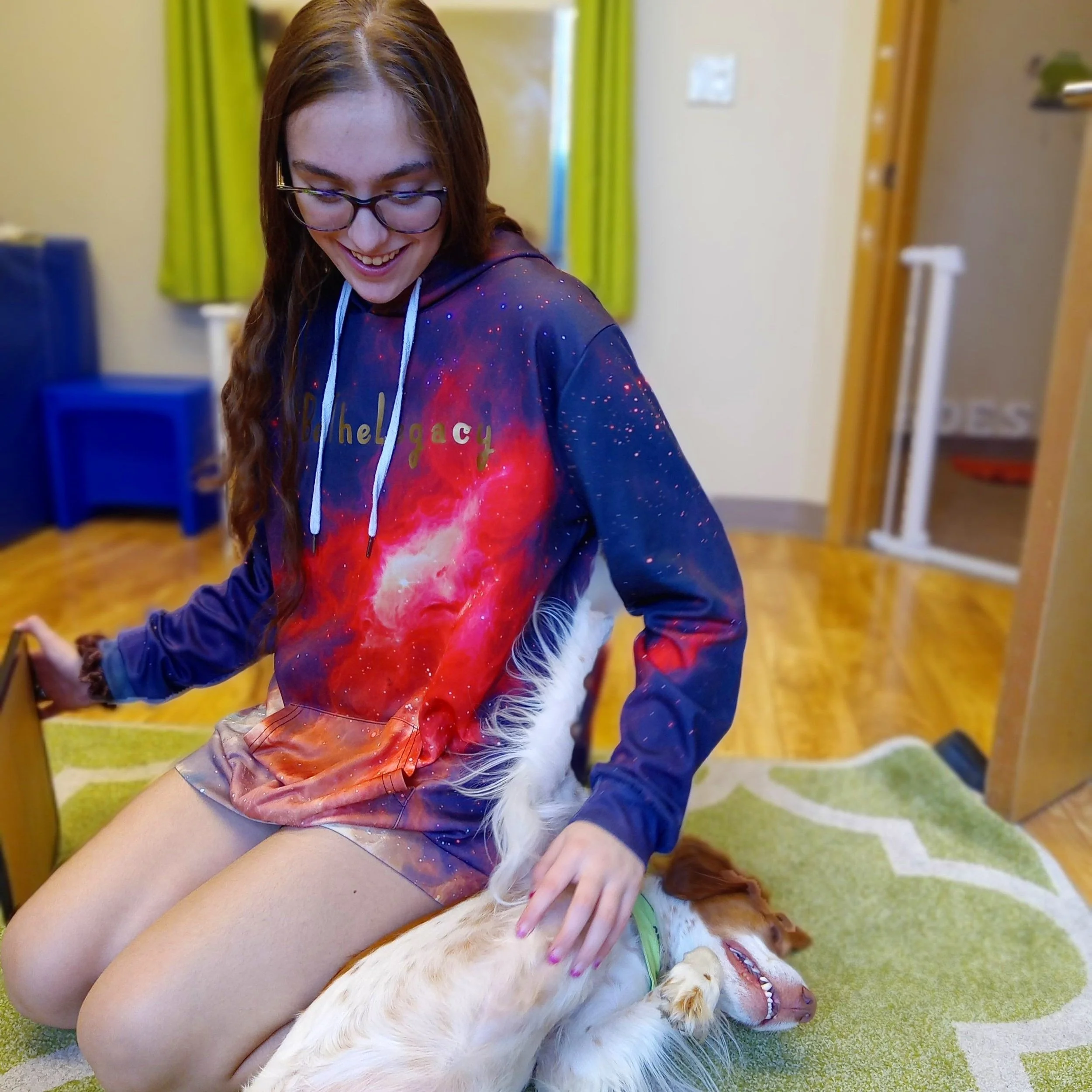
Speech therapy dog Sky brings spontaneous shared laughter to a session with a teen client just by being her natural, goofy self. Moments of laughter like this not only aid in rapport with clients and their families, but also improve my job satisfaction.
If you’d like to learn how to incorporate therapy dogs into your work, check out Paws for Progress: Integrating Animal-Assisted Interventions Into Your Speech-Language Pathology Practice from ASHA Press as well as the 7+ hour, self-paced online course Talk to the Paw: Foundations for Therapy Animal Inclusion in a Professional Setting.
May your days be filled with puppy wiggles and children’s giggles,
Sharlet