Purrs with a Purpose: How Therapy Cats Help People Heal
Years ago I read a book about the special bond between an autistic child and her Main Coon cat, Thula, who was acquired as a service animal. Thula helped the girl overcome her fear of water and learn to swim (Main Coons notoriously love water), kept her calm while at home, and encouraged the girl to explore her community by sitting in a special basket during bike rides.
Thula reminded me a lot of my late cat, Kiwi, who had been my companion for 17 of his approximately 19 years of life. Like Thula, Kiwi was not your typical cat, being bold and socially inquisitive. More than once visitors to my house commented he had eyes that seemed to look right into your soul, and he loved to drape himself across my shoulders in what I would now call deep pressure input.
While my current pack of dogs doesn’t allow me to confidently get another cat, I have long been fascinated with exploring what roles a therapy cat could fulfill. So I was thrilled when I found Elizabeth Worth, a licensed professional counselor, registered play therapist, and certified animal-assisted intervention specialist who helps kids and adults process trauma and explore their full potential with help from her cat, Morpheus.
While Elizabeth’s specific focus in on mental health while mine is on communication, I found so much overlap in how we incorporate our animal partners into sessions!
Here’s some great information she provided not only about animal-assisted therapy in general, but also more about partnering specifically with felines…
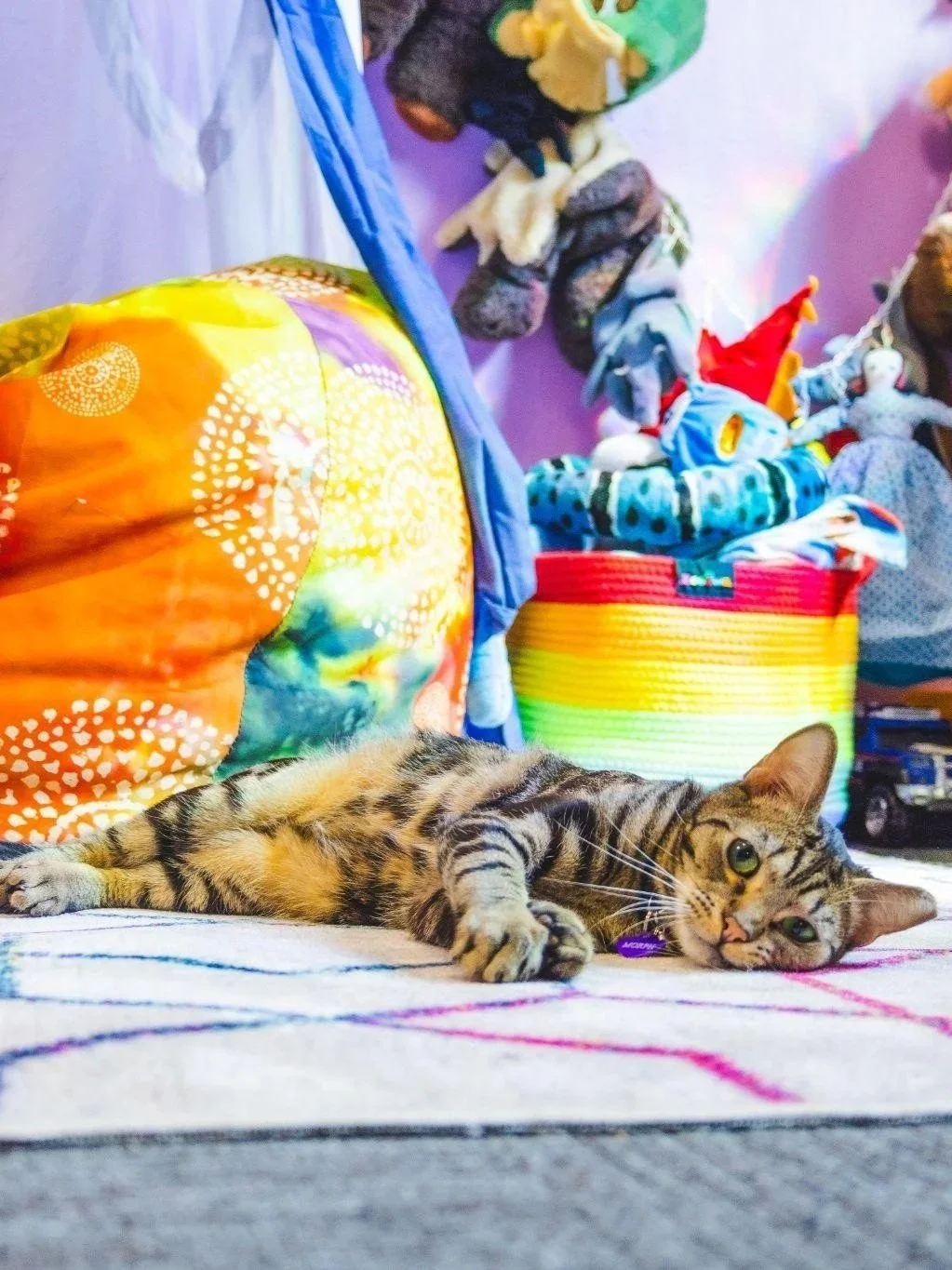
“The main thing I was looking for was an animal who felt like a natural fit for the role and seemed to have the same love I do for this type of work…I think Morph and I are two peas in a pod at this point.”
Learn more about the work Elizabeth and Morpheus do at https://www.jadeandjinx.com/animal-assisted-therapy
If you click a link, it may be an affiliate link and I will earn a small commission. If I don’t use and love a product, you won’t find it here!
Animal-assisted therapy…with a cat!
Elizabeth first found the power of the human-animal bond while working at ranch that incorporated over 30 animal species as co-therapists. When starting her own private practice, she already knew she wanted to include cats into work, naming her business “Jade and Jinx Play Therapy and Trauma Center of Colorado” after her two Main Coon cats. She then added Morpheus—Morph for short—finding that a cat was much easier to include in an office setting than Elizabeth’s other favorite partners, donkeys and horses.
“Cats have made a huge imprint on my soul over the years and I know that by incorporating them into my work that would support so many of my humans in their healing journey. To be chosen and loved by a cat is one of the best feelings in the world and I wanted everyone who seeks that relationship to be able to have one even if they cannot have a cat at home.”
Selecting the right therapy cat
Elizabeth’s search demonstrates the power of persistence. “The main thing I was looking for was an animal who felt like a natural fit for the role and seemed to have the same love I do for this type of work.
“I had let clients know I was looking and set the expectation that this was going to be a ‘we will see’ type of situation. I informed clients so that they would be prepared in case Morph was not fit.
“Since I am a huge believer in autonomy and choice, I knew that I had to make sure my future animal partner was up for the position and taking on this type of work. We searched for over 6 months for Morph as we were not feeling the connection we wanted with any of the cats we were meeting.
“It was actually a client family who came in right after going to a local cat cafe and told me I had to go and meet some of those cats. When we met Morph he was sitting next to probably the most reactive cat there and was still in full chill mode. I swear he and my partner looked into each other's souls and it was a done deal from there.
“After Morph adjusted to his new home, I was planning on slowly integrating him into the office, but Morph had a very different plan…I brought him on his first day and he refused to be left behind after that.
"When he is at work he is on, interacting, greeting clients, being social, and when he is home he knows he can hide away and not interact.”
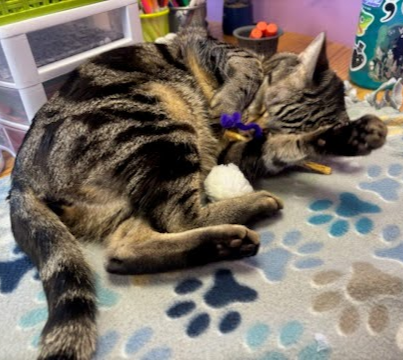
“Morph came all the way from Hawaii to a Cat Cafe in Denver where we met him. It was love at first sight and Morph came home with us less than a week after meeting him. I was excited, tentative, and a bit nervous to bring him into the office to see if he would be a fit,” Elizabeth shared about her therapy cat.
Incorporating a cat into animal-assisted therapy
Elizabeth originally took a three-day intensive training to work more ethically with animals while interning at a ranch that offered AAT with everything from rats to alpacas and horses.
“Once I moved into private practice and got Morph, we worked to get certified through AAAIP.
“I’ve continued my CE’s [continuing education] as needed and even took an animal assisted training and Eye Movement Desensitization and Reprocessing [course] this year…and learned how to do some Emotionally Focused Therapy on cats as well this year in a training which was super cool.”
Since Elizabeth has her own private practice, she’s found accommodating Morph’s needs fairly easy.
“I have two treatment rooms, a waiting room, and an area where I have my office. Morph’s litter and food live in my office which is an ‘Elizabeth and Morph Only Zone’. This is an area where I joke that he takes his required OSHA breaks throughout the day.
“He also has an extra water bowl in a treatment room and beds throughout the office, some meant for him and others he is able to find, especially in the playroom.
“I bring him daily in his carrier (our drive is 10-15 minutes) and he usually purrs as I put him in there with his work blanket that he loves.
“He gets to roam free through the office. I have a private bathroom between my two treatment rooms that remains cracked so he can come and go as he pleases. Morph is very comfortable there and usually starts his day sunning himself in his window bed to ground for his day.”
Morph works four day a week alongside Elizabeth but gets all the breaks he needs throughout the day. “I joke he is the only employee I have ever met that gets to sleep on the job and still be considered a great employee.
“We can ask Morph to join a session but he does choose if he does not want to stay or what he might need during the session as he is an autonomous animal that gets to make those choices and this teaches my clients a lot as well.
“I have a giant pillow dog bed…and he will lay face to face with a client while they are reprocessing together on that pillow to support them with the hard material. He will even show his belly and ask certain clients for belly rubs during this time which creates such regulation for both the client and Morph.
“I make sure to teach clients that most kitties do not like belly rubs but Morph is his own cat which means he can choose belly rubs if that is what he wants and if the client wants that too.
Since play-based therapy can get a bit “big”, Morph always gets choice and control over the level of interaction. “He does choose to leave some of the louder and more active play sessions especially when balls start getting thrown around.
“At first Morph would need some support with these boundaries but now he knows the role and that he has autonomy, which is great.
“I personally love when he gets involved in the sandtray or an art intervention as I have a lot of clients who struggle with themes of perfectionism and Morph makes sure he helps the interventions not be perfect by lending a paw.
“And usually making a cute mess which a client can process through as Morph is able to challenge this theme a lot of the time without pushing them out of their window of tolerance.”
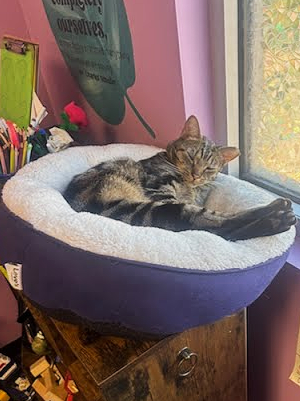
Therapy cat Morpheus on one of his many cat beds throughout Elizabeth’s office. “Morph is usually napping pretty hard in a blanket or sun spot when not in session.” Elizabeth often shares funny and/or relaxing photos of the therapy cat sleeping on Instagram @jadeandjinxtherapycenter
Advice about providing feline-assisted therapy
Elizabeth’s biggest piece of advice for anyone considering this path: “Get to know your cats like you would a human. Understand their signs and signals, work to respect their boundaries, and try to understand their language and magic will happen.
“I truly feel cats give out what they receive in relationships and when you give love to a cat, they will give you so much in return.
“I think there is a stigma around cats that they are aloof and not relational and I do not agree with this at all. My kitties are so expressive and have taught me so much in life and continue to teach me all sorts of things.
“I am so grateful for my kitties and what they have done to support my [own] mental health. I am so happy to be able to share this with my clients through the work we do with Morph.”
Therapy cats—Good for the clients and clinicians
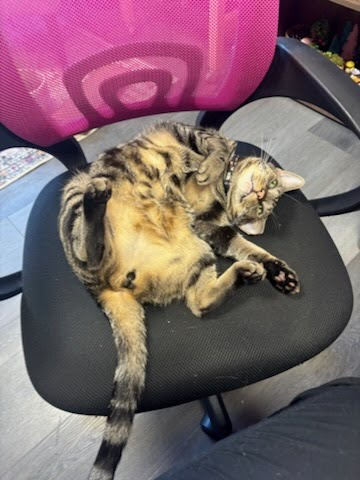
“Sometimes in the mornings when I am not with clients and doing a lot of administrative work he yells at me until I give him the attention he is clearly asking for,” Elizabeth reports of her therapy cat. “I will say Morph’s one requirement is he needs lots of attention…which I find really sweet.”
As Morpheus has settled into his role as Elizabeth’s furry co-therapist over the past few years, she’s noticed his special strengths in connecting to certain clients.
“Something that has surprised me in his role is how he supports neurodivergence. Kids can read and understand him more than they can sometimes understand humans. By learning Morph’s signs, signals, and nonverbal cues, he can help them socialize differently with peers which has been amazing growth to see in my clients.
“A lot of my clients now experience peer interactions differently and have a better skill set for forming secure attachments in life.
“Morph is also a great teacher of boundaries and how to cope through a situation where a client might want something that Morph does not and helping them with adaptive skills for working through them.”
Sharing one of the most profound moments therapy cat Morpheus helped facilitate, Elizabeth notes that, “He does seem to have this intuition of showing up in sessions exactly as we need it and it always leaves me in awe”
For instance, while working with an adolescent who had experienced a recent mental health crisis, she found out the family was faced with euthanizing one of their own cats.
“I was anxious having this session as we were worried that this news might escalate my client again and be too much for him to handle.
“Morph walked into the room as we were getting started and immediately zoned in on a small bug in the therapy room. He was not disruptive or big in his energy but he was focused and followed that bug around for the whole session.
“I watched my client then zone in on Morph. I think he needed to be able to track Morph that session as it was too much for him to sit there and hear this news.
“Instead he was able to be present with the news while being grounded by Morph's distraction of bug hunting. I think noticing the bug and Morph was a much safer place for this client to be.
“It even helped Mom ground a bit…Morph was able to make them both laugh through some tears a few times and provided some in-the-moment grounding that I am not sure if I would have been able to do on my own.
“Both Mom and client commented on his presence and how it felt extra supportive in this session. I felt the shift that Morph created for us in that space.”
Elizabeth has also found personal benefits from partnering with her cat as well, reporting that she feels more regulated herself while at work.
“Morph supports me, too, and reminds me to take breaks and give him lots of love. He brings me an immense amount of joy and I feel so lucky to have him as my animal partner. I try to show him in so many ways how much I love and appreciate his presence in the office.
“I will say he brings me a lot of my clients now too, as a lot of people want to work with cats and know what that is like. He has enhanced my work and my practice in ways I did not even know was possible.”
“[Animal-assisted therapy] provides so much safety, connection, and regulation…All of the animal partners I have worked with over the years have amazed me in so many different ways.I feel so honored to get to witness so many beautiful moments between humans and animals and the healing that it supports.”
I couldn’t agree with you more, Elizabeth!
May your day be filled with puppy wiggles (or cat purrs!) and children’s giggles,
Sharlet
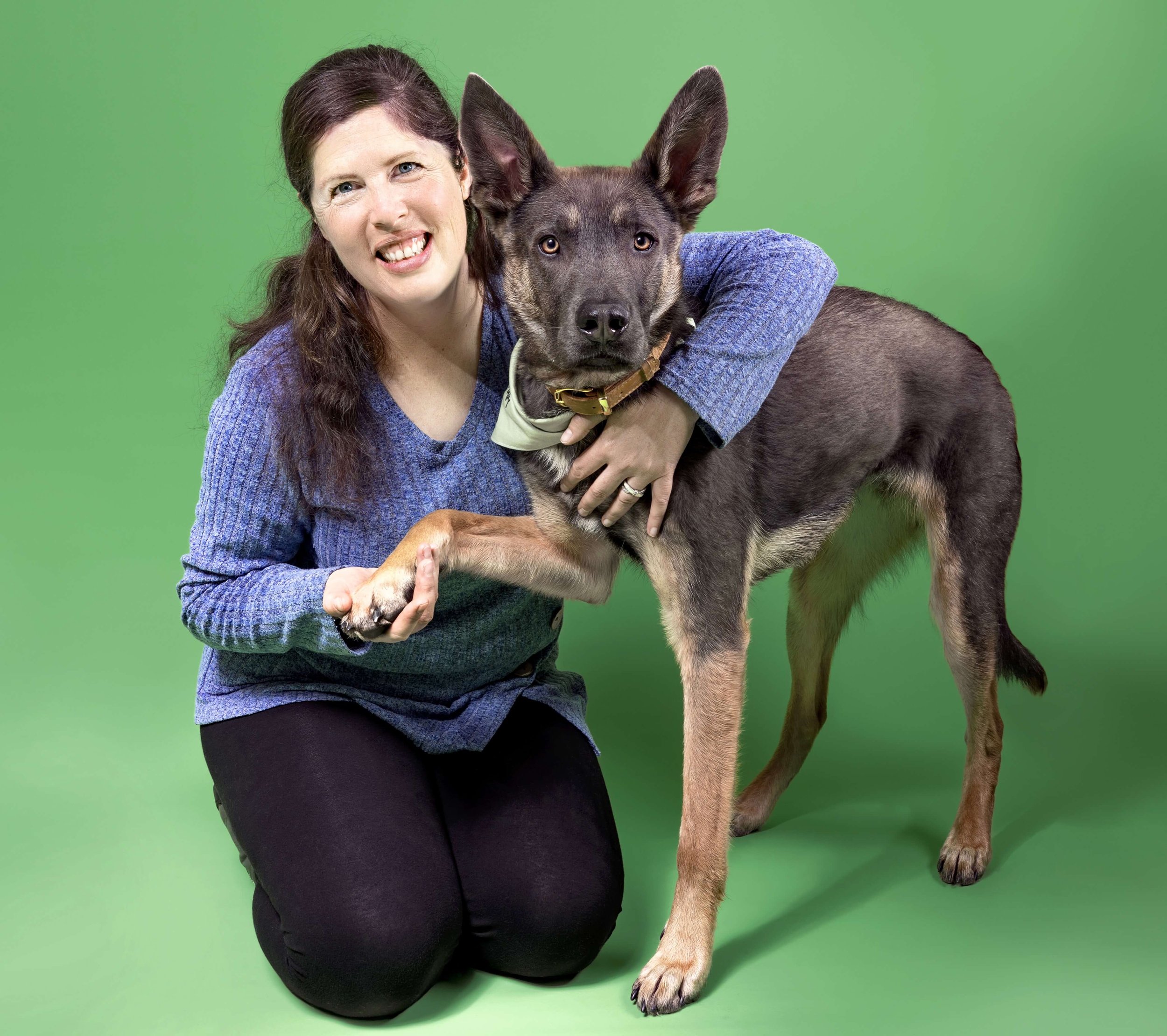
Learn more about animal-assisted therapy with the book Paws for Progress and course Talk to the Paw!
Related articles: