Partnership with Purpose: Is a Facility Dog Right for You?
In schools, courthouses, and hospitals across the country, facility dogs are quietly changing the way people experience education, safety, and healing.
But what exactly is a facility dog, and how does a professional get started partnering with one?
Two dedicated facility dog handlers helped me explore this exciting potential avenue for health and human service providers interested in including the benefits of the human-animal bond into their work.
Jennifer Mitchell is a speech-language pathologist who welcomed her Canine Companions trained facility dog, Brandy VII, into her life just last fall. She has a background in behavior analysis, which has informed her practice as it has evolved to reflect a more holistic, student-centered approach.
Coming from a social work perspective, Catherine Ricchetti is a veteran facility dog handler and trainer. She co-founded the organization Paws 2 Connect when she saw a need in her region to develop safe and effective animal-assisted intervention programs for schools, law enforcement, and medical facilities.
Both women are passionate about the work they do with their canine partners and provided inspiration and guidance for others who may be interested in partnering with a facility dog themselves…
Why a Facility Dog?
A facility dog is generally recognized to be specially selected and trained for extended work in busy settings.
The Association of Animal-Assisted Intervention Professionals, in their white paper on facility animals, states that, “Similar to partnering with any animal within the broader field of AAI, there isn’t a single pathway to obtaining a facility animal.
“Many respected programs partner with third-party service and training organizations to be matched with animals specifically trained for facility roles. In other instances, an individual handler may acquire an animal as a pet and then undertake extensive training to prepare the animal for long interactions in their work environment.
“While no one approach is inherently superior, each path has best practices that should be carefully explored and documented when building a facility animal program.”
Jennifer, who works in California on a campus that serves preschool through 8th grade, had 27 years of experience in her field before adding animal-assisted interventions to her repertoire. She credits first-hand experience in a special day class where the teacher partnered with a dog named Rhett from Canine Companions (a national non-profit organization that connects people with disabilities and the professionals who work with them with dogs specially trained to help).
“Rhett brought a calm, steady presence to the classroom that helped students feel safe and more open to engagement. I saw students who were typically hesitant become more willing to participate in activities, take risks with communication, and connect with others.
“What stood out most was how Rhett helped build a sense of community in the classroom. He wasn’t just there as a support for individual students, he was part of the classroom culture, fostering connection, motivation, and joy.
“Seeing Rhett in action was truly impactful and stayed with me long after that experience.”
Catherine, on the other hand, found herself early in her career seeing friends and colleagues with really nice dogs and suggesting they try partnering with them for work. After a while, she realized the advice she’d been giving to others was really meant for herself, and she hasn’t looked back since.
After partnering with her own dogs Miss Siggy and Dr. Copeland in a school setting, she’s been helping train other professionals to establish facility dog programs of their own for more than 20 years now.
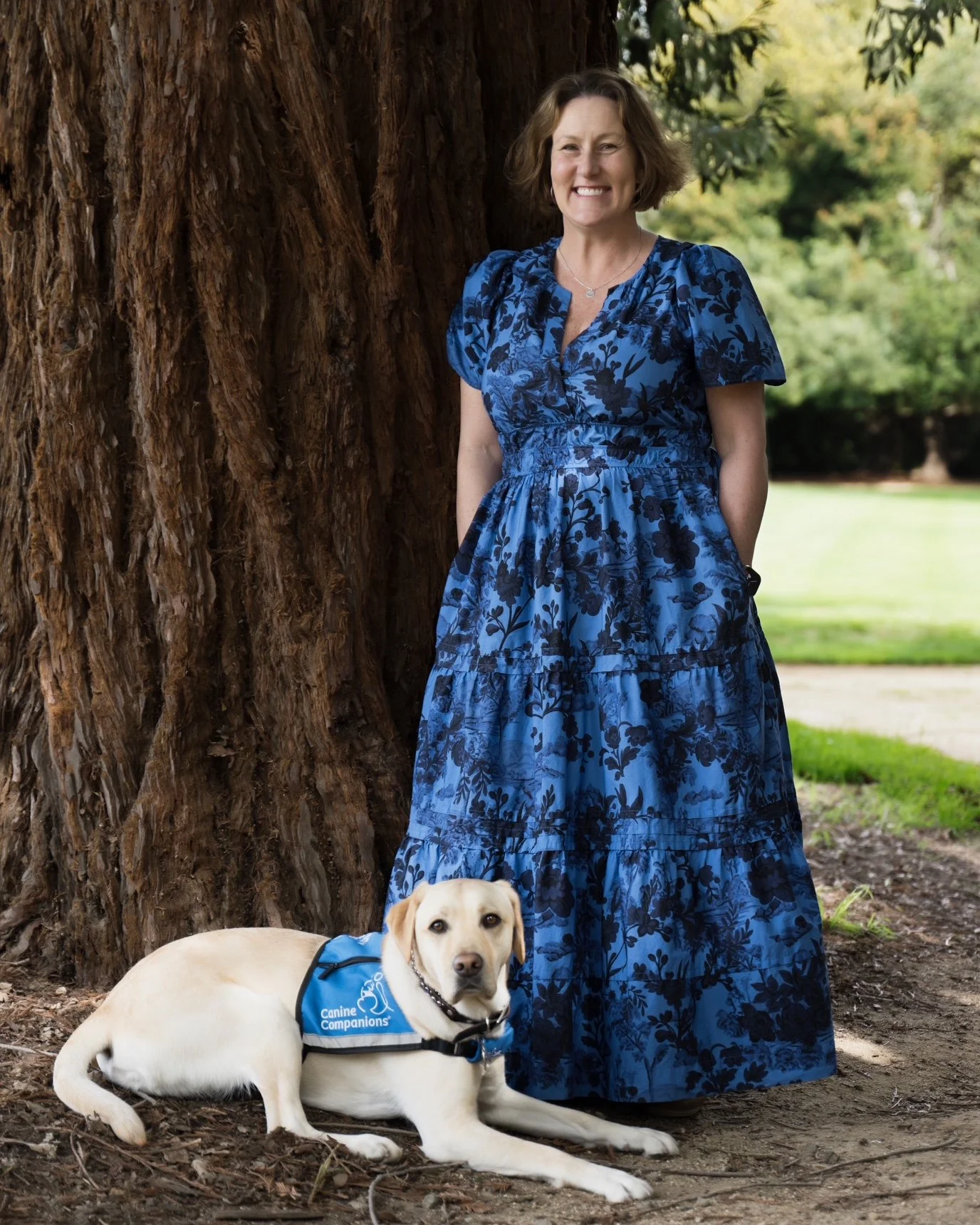
Animal-assisted speech therapist Jennifer Mitchell partners with her facility dog Brandy VII, who was specially bred, raised, and trained for nearly two years by Canine Companions’ puppy raisers and professional trainers.
Getting Stakeholders to Buy in to a Facility Dog Program
When Catherine first broached the idea of bringing a dog into her school in 2002, facility and therapy dog programs were rare and generally unheard of. Luckily, her principal was impressed with the idea and helped her get a proposal to superintendent and board of education.
“The process took me about two years. I did have some opposition with colleagues, parents, and some BOE members but it was approved for one year. Then I provided anecdotal successes and letters of support, and they approved the program to continue. My first dog [Miss Siggy] was so successful that eventually the school district wanted a dog in every school. I was lucky to help expand the program to seven schools.”
She not only wrote the initial policies for her school, but then helped update them as the program and profession grew.
It wasn’t all smooth sailing, though. “When I started bringing my dog to work with me there were big feelings about it. Some of my colleagues thought I was getting paid to play with my dog. Others were super excited.
“I still suggest…being extra respectful to people who do not enjoy the dog around. It helps.”
Overall, however, Catherine says the program has been very well received. In fact, when others started asking her to present on how Miss Siggy helped her at work, she realized “there was a need and hunger for the information.” After repeatedly photocopying her research, grant applications, and program proposal, she decided to write the manuscript that eventually evolved into Service Trained Facility Dogs.
Jennifer had an overwhelming positive and supportive experience bringing a facility dog into the workplace. When she approached her school district’s superintendent and special-education director, they were immediately encouraging. “Although there were no formal policies in place specifically related to animal-assisted intervention, the strong national reputation and established training model of Canine Companions helped build confidence at the district level.”
One major concern was handling possible allergies. “A small number of families shared that their children have dog allergies; however, they chose to have their children participate as they felt the benefits outweighed the concerns.”
Catherine also speaks to this in her books, as well as in a recent AAAIP webinar Lessons Learned from Professional Facility Dog Trainers .
“Having strong administrative support and clear systems in place makes a significant difference. While it does add responsibility, the impact on student engagement, motivation, and communication can be incredibly meaningful,” Jennifer noted.
Finding a Supportive Community of Facility Dog Handlers

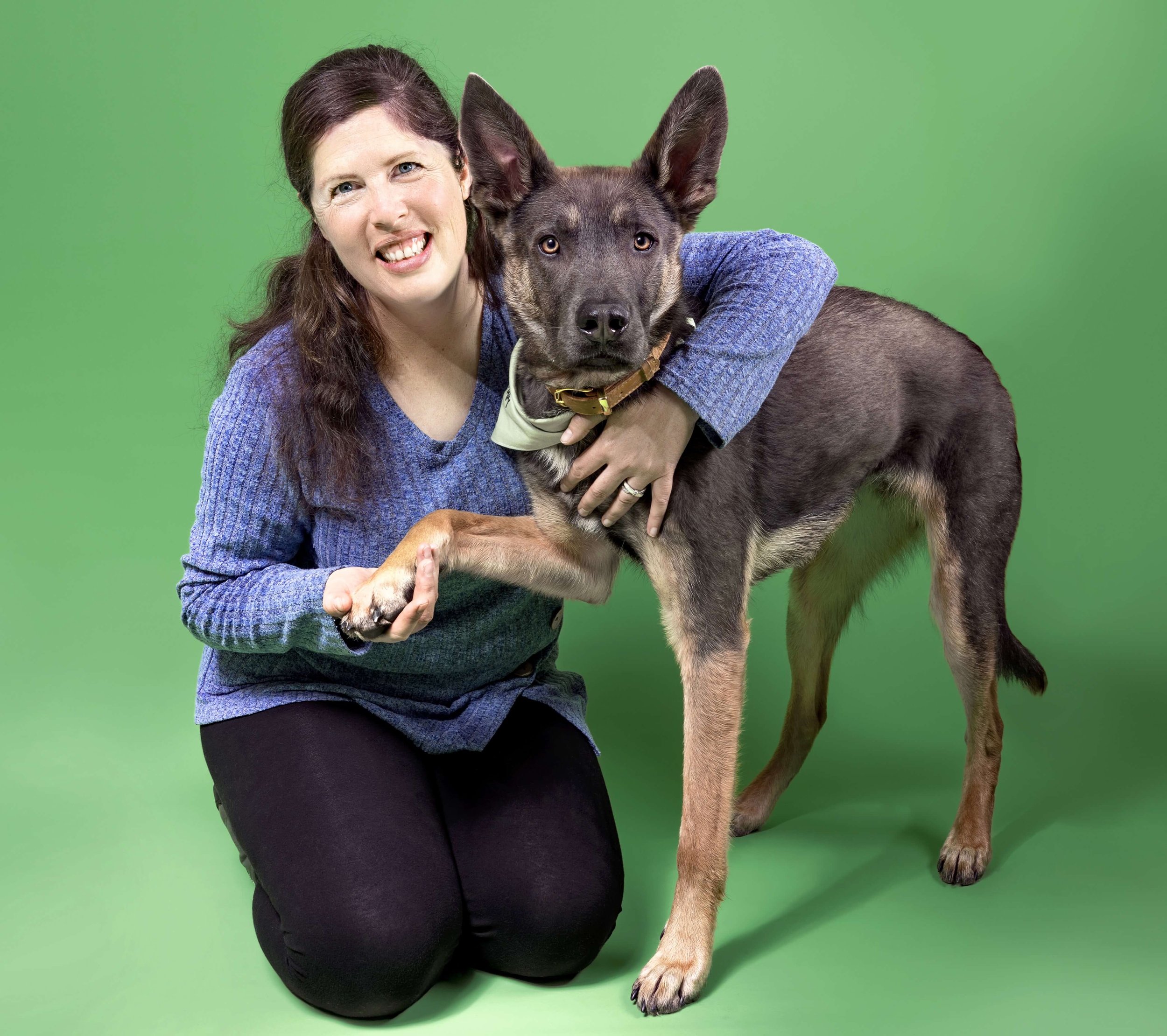
Animal-assisted social worker Catherine Ricchetti, KPA-CTP, LCSW-R, found such a need for information on facility dogs she helped found an organization to help others and wrote two books on the topic!
Catherine, who since beginning a facility dog program in her school district has gone on to become a dog trainer herself and currently works as an adjunct instructor in SUNY Cobleskill’s canine management and handling bachelor’s degree program, initially found herself largely figuring out how to proceed on her own.
She first interviewed many trainers and dog breeders. “I needed [ones] who understood that I was going to be asking a great deal of the canine. If they even hinted [at the unrealistic expectation] that all of their dogs could do this job I scratched them off the list.”
With her trainer “on speed dial”, Catherine trained Miss Siggy in the school setting on a part-time basis starting at 12 weeks of age. (Catherine speaks in further detail about her training approach in The Canine Nitty Gritty: How to Build a Facility Dog Program.)
Jennifer, in contrast, spent nearly two years patiently completing Canine Companions’ partnering process, which she describes as “thorough and lengthy, by also incredibly thoughtful and well-structured.” It included an initial application followed by phone interviews and a full-day, in -person interview. Once moved from applicant to candidate status, she waited almost two years to be invited to attend team training, where she first met Brandy.
Jennifer didn’t wait idly during that time, however. She took advantage of educational opportunities (she is a proud graduate of Talk to the Paw: Foundations for Therapy Animal Inclusion in a Professional Setting) to help “shape the lens I brought with me” as well as to work out the logistics of stepping away from work and home to attend team training.
“Team training is an intensive, two-week, full-time experience where handlers are matched with their dogs and begin learning to work together as a team.”
While staying in on-site dorms, Jennifer learned from a blend of lectures, videos, and extensive hands-on practice from 8:30 to 4:30 each day, with homework each evening to extend the education.
“On the third day we were pre-matched with our prospective dogs, and by the fourth day Brandy was able to return to the dorm with me and stay overnight…From that point on, our partnership began to take shape in a very real and meaningful way.”
Jennifer was coached in eliciting Brandy’s 40 trained commands and public access skills.
“The entire experience felt truly magical and was such a privilege to be a part of. The instructors were exceptional…experienced dog trainers, excellent communicators and presenters, supportive and thorough.
“It was a once in a lifetime experience, and I left confident that I could safely and effectively partner with my dog in a professional setting.”
Jennifer’s support with Brandy didn’t end when she returned home, though. She participated in monthly check-ins with a graduate program director and a cohort of other new facility dog handlers for the first six months. “Those meeting were incredibly helpful—we were able to share experiences, problem-solve, and learn from one another as we all navigated bringing our dogs into professional settings.
“In addition, Canine Companions provides ongoing support throughout Brandy’s entire working career, which has been re-assuring as this is an evolving process.” Most recently, Jennifer and Brandy re-certified through the Assistance Dogs International test, and they will continue to be re-assessed every one to two years “to ensure we are maintaining the standards of a working team.”
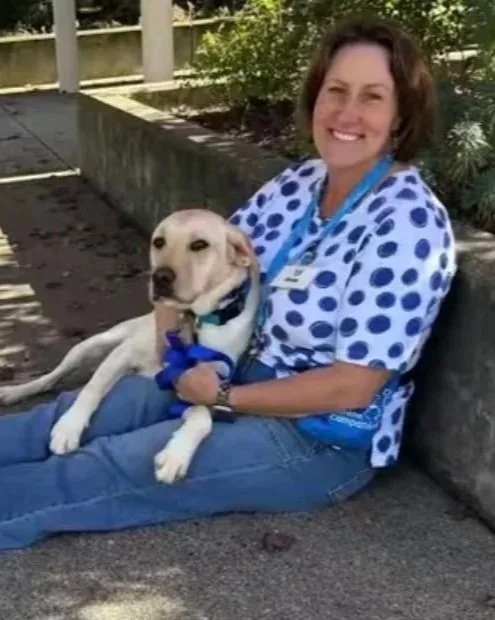
You can follow Brandy and Jennifer’s adventures providing animal-assisted speech therapy together @brandythespeechdog on Instagram.
The Facility Dog-Handler Partnership in Action
Just as when she first watched Rhett in action and became inspired to someday partner with her own facility dog, Jennifer notes, “Students are highly motivated and genuinely excited to have [Brandy] participate in their sessions, and this enthusiasm often extends to the materials we use. Many of my students are especially engaged by dog-themed activities and personalized ‘Brandy’ materials.
“Brandy has been especially impactful for students with more significant needs, particularly those with sensory processing differences. She is able to meet the students in a calm, responsive, and highly individualized way…offering deep pressure input [for example].
“Her presence often helps students feel safe, organized, and more available for communication, allowing me to access skills that might otherwise be difficult to target.
“My students truly look forward to coming to speech—some have even started calling it ‘Brandy Day.’
Jennifer loves seeing Brandy moving around groups of kids, “gently nudging students to stay engaged or creating natural opportunities for communication, such as requesting, commenting, or asking questions.”
She says she often needs to plan extra time to move across campus, as “Brandy is very popular with all of our students…even students who are not in speech are eager for opportunities to see her.”
While Brandy doesn’t typically attend large school assemblies, “There are a couple of eighth-grade graduates who have developed a particularly strong bond with Brandy, and her presence at graduation will be a thoughtful way to honor those connections and bring them a sense of comfort and happiness during this important milestone.”
She notes that “school days are inherently unpredictable, and partnering with a facility dog requires ongoing awareness of both the student’s needs and the dog’s well-being in real time. Strong organizational and time management are critical, as you are balancing your caseload with the added responsibilities of caring for the dog.”
But for Jennifer, “the benefits of partnering with Brandy have far outweighed any challenges.”
Fostering Future Facility Dog Handlers

Catherine Ricchetti’s first facility dog Miss Siggy worked alongside her for 12 years and even who landed on the cover of NY Teacher Magazine in 2005.
Catherine has become a leader in mentoring future animal-assisted interventionists not only through her organization Paws 2 Connect, but also by authoring two books on the topic, Service Trained Facility Dogsand The Canine Nitty Gritty: How to Build a Facility Dog Program(with Kathy Stevens). She is even an Association of Animal-Assisted Intervention Professionals evaluator.
Throughout her work Catherine emphasizes the need to take a deep dive into canine choice and body language. “Reading a dog well is an art as well as a science…We need to be the givers and the protectors of our working dogs. It is a hard balance to learn as a handler and it takes practice.
“When a dog does not enjoy working in a facility it is hard for the handlers. When I help people consider bringing a dog to work I try to address this before their entire heart is in the game. Some canines find the work too stressful. The dog’s needs should always be at the forefront of the handler’s mind.”
She notes, “It’s challenging to do your professional work well and incorporate your dog into the work. Feel confident in your chosen profession and then add a dog. Training and reading your dog well…it’s an entirely new profession.
“[But] after you become competent partners, the canine then reduces your workload and makes stressful times easier.
“Be gentle with yourself…it takes practice.”
Final Thoughts about Facility Dogs and You
Jennifer and Catherine are two of the many professionals partnering with facility dogs across the world, but their experiences showcase the variety of ways this partnership can unfold.
If a facility dog might suit your needs as an animal-assisted interventionist, please check out the resources at Paws 2 Connect, AAAIP, Canine Companions, and throughout the Speech Dogs site.
May your day be filled with puppy wiggles and children’s giggles,
Sharlet
Related articles: