The Science of Canine Well-Being Part One : Supporting Therapy Dog Resilience Through Selection
“Welfare.”
“Agency.”
“Resilience.”
These are all words we hear frequently when learning to partner with a therapy animal. But they are not small, easy concepts.
I talked with Dr. Kristina Spaulding, Ph.D., CAAB, to explore these topics in more depth and better understand their impact on how we select our therapy dog partners and maintain their mental health.
Dr. Spaulding has a PhD in biopsychology—the study of the biological basis of behavior—and is a Certified Applied Animal Behaviorist who teaches a variety of online courses and webinars on the science of behavior through her website www.sciencemattersllc.com.
She is the author of The Stress Factor in Dogs: Unlocking Resiliency and Enhancing Well-Being , regularly presents on canine behavior science at conferences, and currently serves on the International Association of Animal Behavior Consultants Foundation Board.
Here’s her insights in response to my questions about how we as therapy dog handlers can help our canine partners stay resilient…
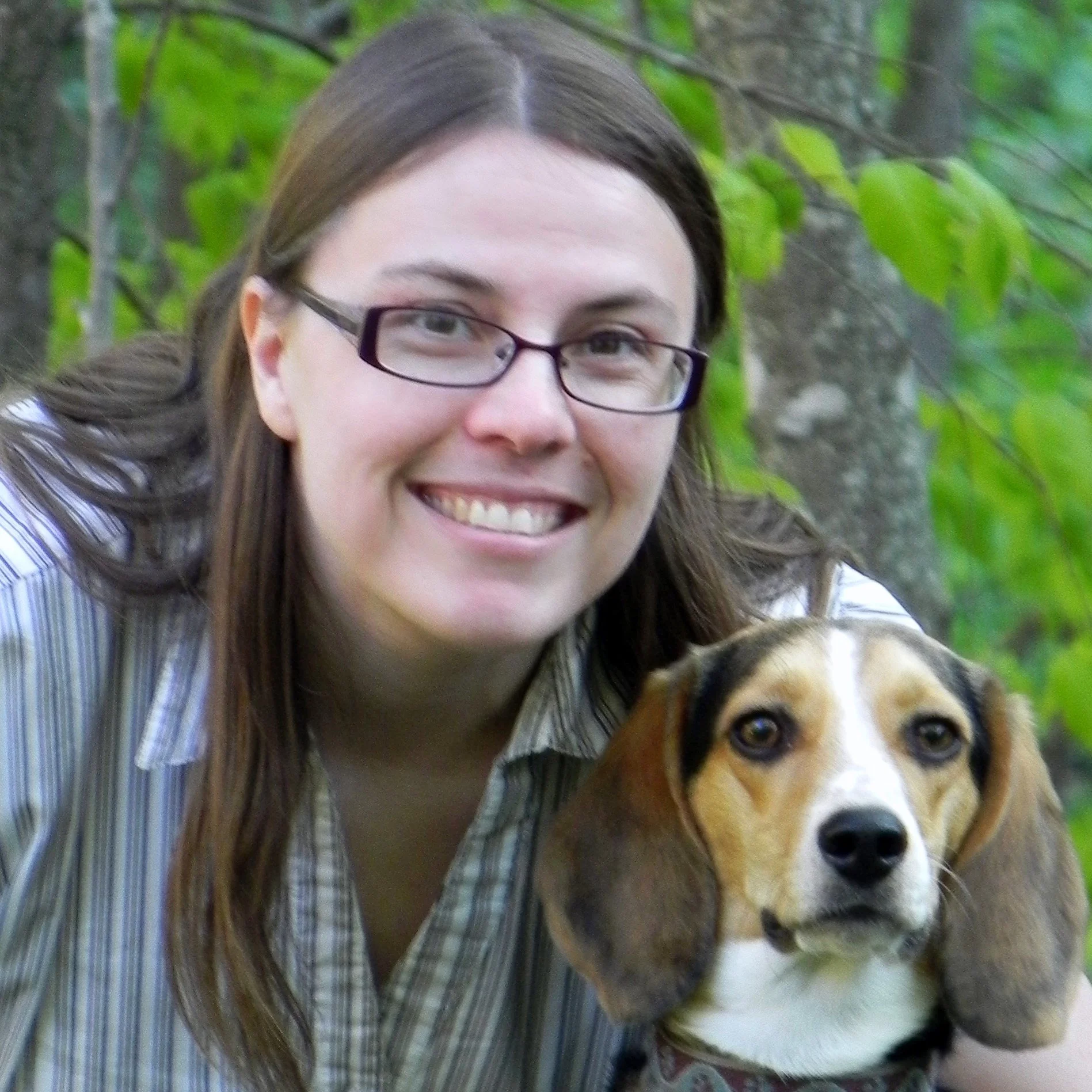
Canine well-being expert Dr. Kristina Spaulding with her Beagle mix Darwin.
If you click a link it is likely an affiliate link and I will earn a small commission if you purchase. It does not cost you anything extra. If I don’t love a product, you won’t find it here!
Sharlet: First off, I know looking at what research actually shows is of paramount importance to you and your work, but you often qualify your answers to specific questions with “it depends.” Can you explain why?
Dr. Spaulding: Because it's true that when we're talking about behavior and biology, those systems are very complex and interconnected. There is never just one cause or one effect.
What that means is that exactly how a particular animal will respond depends on many different factors and how those factors combine and interact. Because that is always going to be different from individual to individual and situation to situation, the answer is very frequently some version of "it depends."
I noticed that there were certain phrases I would say very frequently when asked questions: "It's complicated," "It depends," and "We need more research."
Very often, in the animal behavior field and in life in general, we are looking for simple, black-and-white answers. But those kinds of answers do not reflect the reality of the world.
If we don't learn to understand that complexity and learn how to navigate it comfortably and effectively, it will limit our ability to understand behavior and improve welfare in both animals and humans.
Selecting the right dog for therapy work is so critical, yet not as straightforward as we would like.
We need a dog that can be resilient in the face of a lot of novelty --new clients throughout the day, new activities, varying levels of stress and emotion emanating from the humans in the room, impulsive actions, potentially support staff entering and leaving the room, etc..
What does the research tell us about how prenatal and early development interacts with genetics to provide a dog with more or less overall resilience?
When someone is looking to purchase a puppy from a breeder or adopt from a rescue organization with the hopes of eventually having a more resilient adult dog to work with, are there certain factors that you would suggest considering more highly than others? Would you have any different considerations if adopting an adult dog?
This is a great question and a really hard question to answer as well because of what I just said above: it depends, it's complicated, and we need more research.
There are certainly things we do know, and because it is so complicated, there are also no absolutes. We know that when it comes to behavior, the behavior of an animal is always—always, always, always, so this is one case where it does not depend—the result of a combination of genetics and environment.
In science, the question of nature versus nurture was settled quite a while ago, and the answer is: it's both. It's always both. It's always about how they interact with each other.
I like to think of genetics as similar to wearing tinted glasses.
Everything that an animal experiences is filtered through genetics, like looking through tinted glasses. How an animal experiences events is going to depend, in part, on those tinted glasses (their genetics).
But genetics isn't everything. Genetics defines the limits—the upper and lower boundaries of what a trait can be—but environment shapes and determines exactly where a particular trait will fall within those limits.
Because it's complicated and because it depends, we never know exactly where that trait will ultimately end up. We also don't know exactly what those upper and lower limits are until we find them.
When it comes to genetics, we want to maximize the potential of the individual by choosing good genetics when we can.
That means selecting a breeder who understands behavior and breeds responsibly. They should be screening for health issues that can be evaluated ahead of time, and selecting individuals to breed who are physically and emotionally healthy and stable. In other words, parents who possess the traits we would like to see in the offspring.
Breeders should also be providing a very supportive environment for both the mother and the puppies.
When we're looking at therapy dogs, we are almost certainly going to want dogs that are bred and raised in a home environment so they have plenty of exposure to people.
You also want a breeder who is going to do careful socialization early on. That means being mindful not only of the puppies' physical health and safety, but also their emotional health and safety.
It means not forcing them into situations they find overwhelming, but rather giving them experience with novelty at a level they can handle and always providing them with the option to opt out.
Animals that experience high levels of stress during early development are more likely to struggle to cope with their environment as they get older. Early stressors could include things like
· the mother being sick or highly stressed during pregnancy ,
· being transported frequently,
· moving from shelter to shelter,
· abuse,
· neglect,
· being stray or abandoned, or
· living in a shelter environment.
None of these experiences guarantee a particular outcome in adulthood, but they do increase the risk of fear, anxiety, and other challenges later in life.
I am not saying we shouldn’t adopt. However, adopters should be aware that their dog may need additional patience and support to thrive. And not all dogs, from any source, will be suitable for therapy dog work.
In terms of looking at specific individuals, I would look for animals that are very social, recover quickly when startled, show curiosity about new experiences, and do not become overly excited or overly fearful.
I think I would look for relatively similar traits in both puppies and adults, while recognizing that puppies are naturally going to have shorter attention spans and less life experience than adult dogs.

Speech therapy dog Zephyr is an example of a pup from a rescue organization that prioritized early positive socialization.
After being birthed in a “mama barn” away from the stress of the main shelter, his litter was raised in a foster home.
He was then transferred to an experienced puppy raiser to await his forever home (with me!)
Photo courtesy of Three Little Pitties rescue.
There’s been some buzz on popular therapy dog forums about early neural stimulation, a set of brief, specific exercises done with very young puppies with the aim of producing better lifelong stress tolerance.
What does the research actually say about the effects of early neural stimulation for puppies?
There's relatively little research on early neural stimulation in puppies. What research does exist generally does not suggest that there is any specific benefit to the particular techniques used in early neural stimulation that goes above and beyond simple handling.
We do want puppies to be handled from a young age, but I am not convinced by the evidence that going through the specific early neural stimulation procedures provides any special benefits beyond those associated with normal, appropriate handling and exposure.
What are your thoughts about temperament testing? Is there a particular protocol that you think research best supports or a best age at which to test? What factors can influence the validity of temperament testing?
This is another really complicated question.
Temperament testing in shelters appears to be very unreliable and may not even be valid.
In this case, reliability means that if an animal is tested at one particular point in time and in a particular context, and then tested again later, the results may not be the same.
Validity refers to whether performance during the test actually reflects how the animal would behave in a real-world environment, such as a home.
So, I'm going to do that thing I talked about earlier - we need more research. The research we have right now does not provide good evidence supporting the effectiveness of temperament testing in shelters.
However, we don't really know whether that means temperament tests can never be predictive, or whether we're simply not doing them correctly (emphasis added).
The story is a little different when we look at temperament testing in purpose-bred dogs, such as service dogs and working dogs.
In those situations, dogs are being bred under relatively careful, controlled, and consistent conditions. They're often going through similar training processes, and we're looking at placing them into similar types of roles. There is much less variation in those circumstances.
In those cases, temperament testing does seem like it may be more predictive.
If you’re as fascinated as I am by these science-backed answers, you won’t want to miss part two (out next week) where Dr. Spaulding discusses training and handling ideas that can support our dog’s well-being.
In the meantime, may your day be filled with puppy wiggles and children’s giggles,
Sharlet
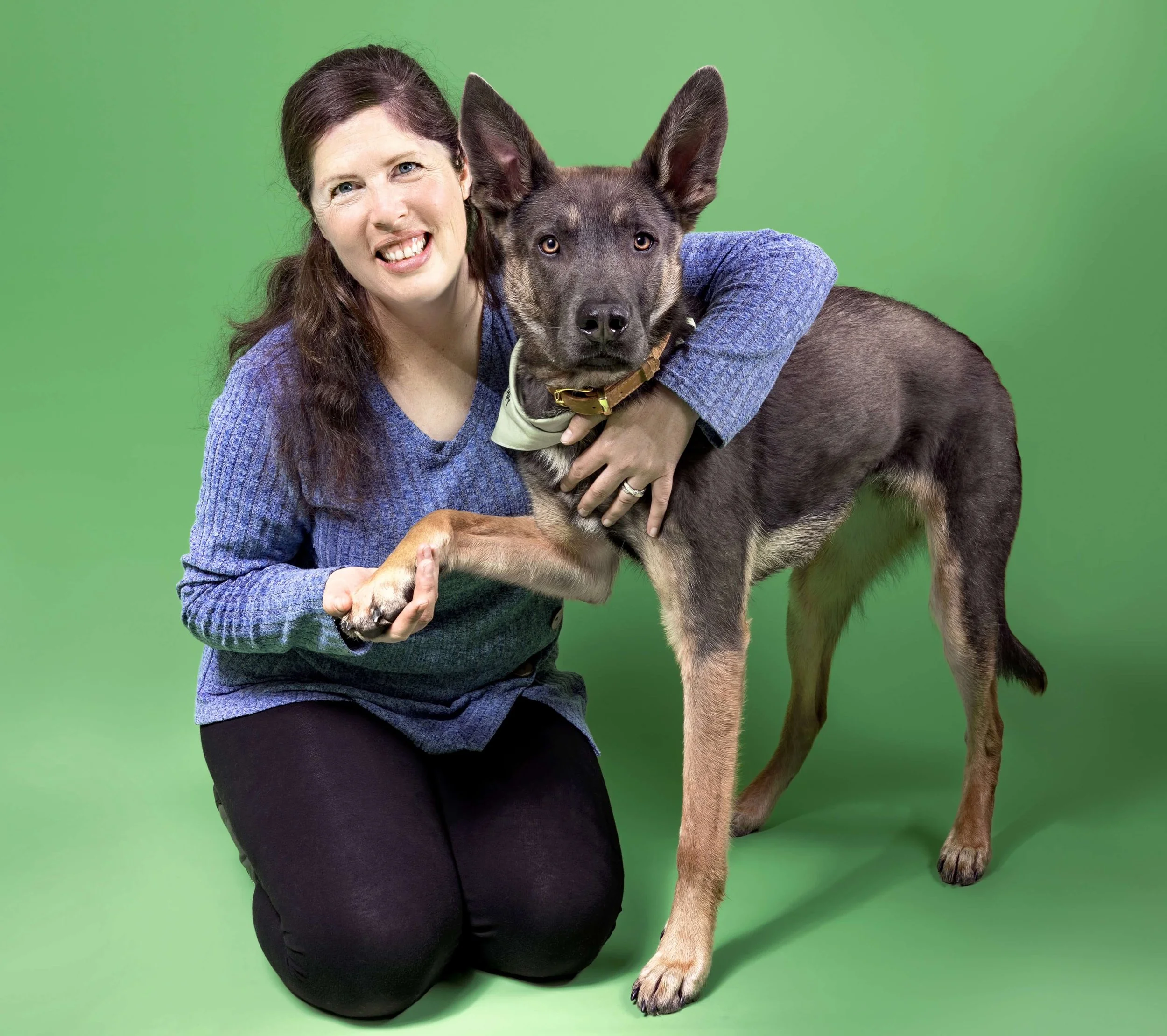
While you’re waiting, don’t forget to explore the resources on the Speech Dogs site and check out related articles on therapy dog selection based on my experiences with young Zephyr (see below).