

Puppy Wiggles and Children’s Giggles
Articles about animal-assisted speech therapy
Your animal-assisted therapy resources are here!
Your animal-assisted therapy resources are here!
Now there’s two resources to help you start your therapy dog journey today!


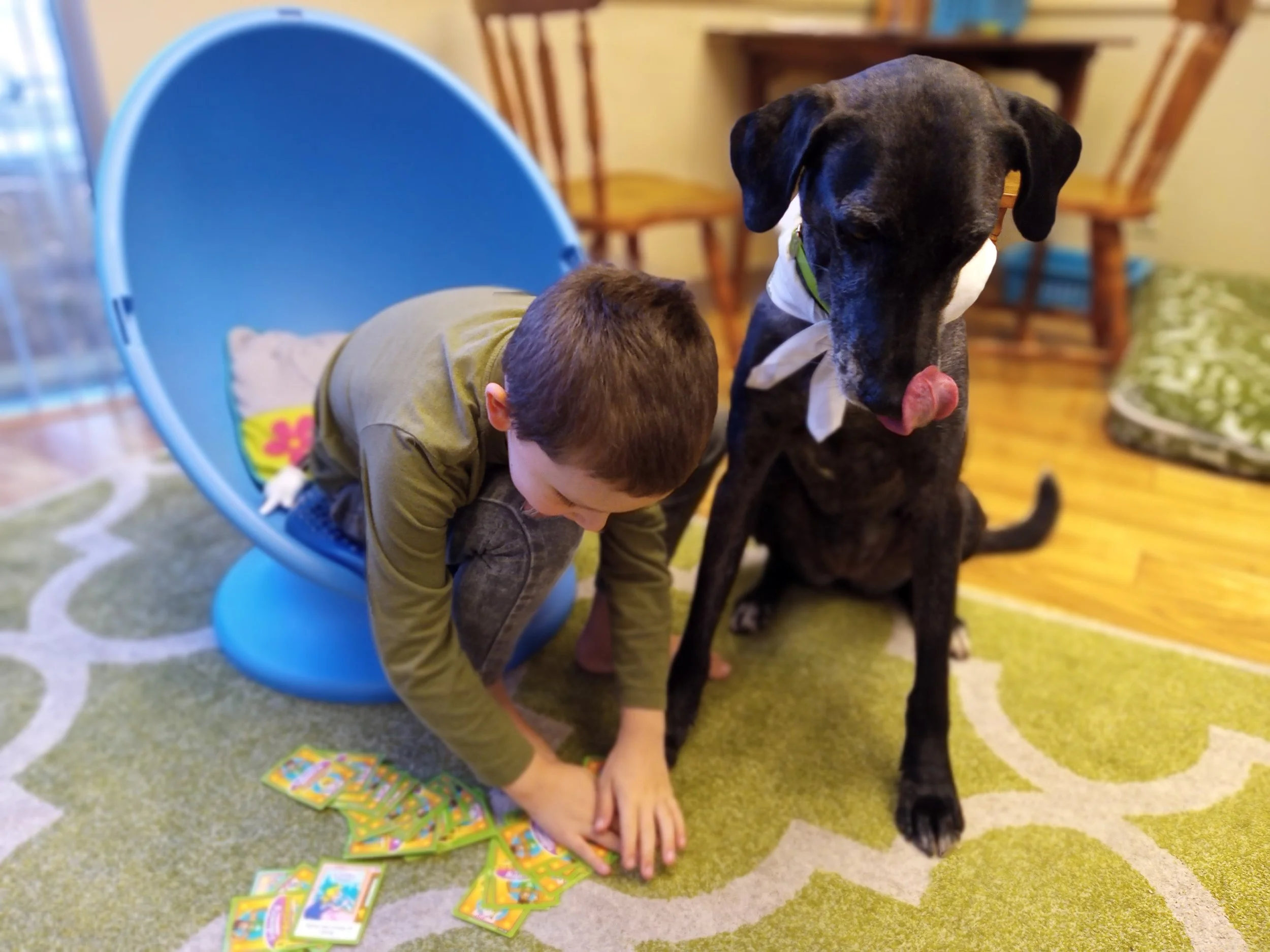
5 Myths about Therapy Dogs: A Guide for Speech-Language Pathologists
If you google “therapy dog”, you’ll find plenty of images of serene-looking Golden Retrievers and Labradors, usually resting quietly alongside a person who is elderly or disabled. Human interest stories aimed at the public often celebrate a therapy dog that is trained to perform lots of tricks to entertain or assist. If your canine partner doesn’t fit this mold, you may think it’s impossible to use him or her in a professional role, but did you know that the core feature of a therapy dog is actually the ability to form a powerful human-animal bond? And that can look many different ways! Let’s explore a few common misconceptions about speech therapy dogs as you decide if animal-assisted speech therapy is right for your practice:
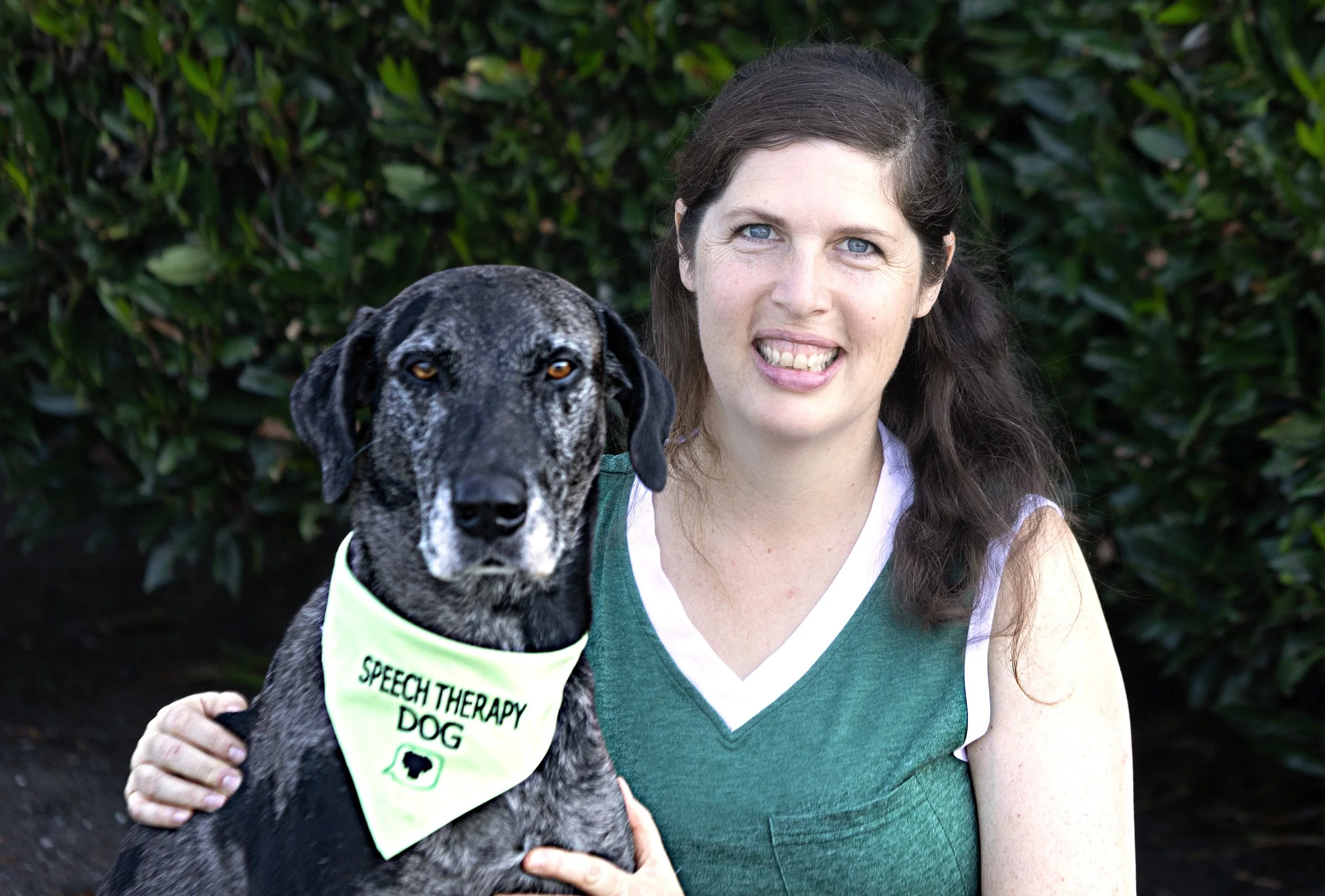
Animal-Assisted Speech Therapy: Why Would an SLP Incorporate a Therapy Dog?
Are you wondering if including a therapy dog into your SLP practice could be right for you? Have you dreamed of bringing your beloved pet to work? Do you feel unsure about how to get started in animal assisted interventions? I had all these thoughts myself when I decided to dive into the world of speech therapy dogs in 2019. I’ve learned a lot through trial and error, finding some great resources, and developing a team of both dog experts and master clinicians to help refine my skills. I want to help other SLPs interested in building a skill set around animal assisted therapy and more specifically, partnering with a therapy dog. My dogs Delta Dawn, Johnny Utah, and Bodhi have all challenged and improved me as both a person and a speech therapist. I’d like to share our journey through this blog.